









Balochistan’s government has pledged to protect Saudi investors after a business delegation expressed interest in the region’s mining, energy and livestock sectors. The Balochistan government outlined several projects under discussion, but disclosed no signed investment agreements, funding commitments or start dates.
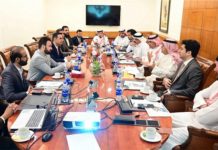
Prince Mansour bin Mohammad Al Saud, chairman of the Saudi–Pakistan Joint Business Council, led a 10-member business delegation that met officials in Karachi on 11 November. Officials presented plans for a gas-fuelled urea fertiliser complex and a ferrochrome plant, along with opportunities in industrial development in Lasbela, olive cultivation, livestock farming and the coastal economy. The government said Prince Mansour had expressed interest in projects ready to start.
Bilal Khan Kakar, vice-chairman of the Balochistan Board of Investment and Trade, told Arab News on 16 November that the they had a dedicated security protocol for foreign investors and would protect their staff, equipment and project sites. He also said Saudi businesses had agreed to create 20,000 jobs for skilled young people from Balochistan. The Balochistan government’s statement said Prince Mansour had pledged to speed up efforts to find work for skilled workers from Balochistan in Saudi Arabia, but gave no figure. It remains unclear where the 20,000 jobs would be based or when recruitment would begin.
Saudi interest in Balochistan’s mining sector predates the visit. In January 2025, Saudi mining minister Bandar Alkhorayef told Reuters that Manara Minerals was exploring an investment in Reko Diq, a copper and gold project in Balochistan’s Chagai district. The government’s account of the Karachi meeting did not name Reko Diq among the projects discussed. Barrick Mining said in November that it was still reviewing the project and expected lower spending. In April, the company said it would slow development and continue the review until mid-2027, citing worsening security conditions in Pakistan and the region.
Kakar cited Reko Diq and the Chinese-backed Saindak copper and gold project, also in Chagai, as examples of foreign involvement in Balochistan. Some Baloch nationalist groups, including armed organisations, oppose projects such as Reko Diq, arguing that the agreements allow outsiders to exploit the region’s resources at the expense of local communities.