













The Baloch Yakjehti Committee’s (BYC) Human Rights Department said it documented 507 alleged enforced disappearances and 150 civilian killings in its report on human rights violations against Baloch people during the first six months of 2026.
The six-month report documents alleged enforced disappearances, extrajudicial killings, military operations affecting civilian populations, restrictions on freedom of expression and what the BYC describes as the political use of legal provisions.
According to the report, 303 people remained missing and the status of 22 others could not be verified. It recorded 150 releases, including people detained before the reporting period, and alleged that 32 missing persons had been killed in custody and their bodies later found dumped in different locations.
The BYC said those subjected to enforced disappearance included 44 minors and 135 students, teachers and researchers. Its section on women recorded 16 cases. It alleged that some students were taken from university campuses in Balochistan as well as Islamabad, Karachi, Lahore and Multan.
Quetta recorded the highest number of cases, with 79, followed by Kech with 77, Panjgur with 65, Gwadar with 55 and Karachi with 33, according to the report.
The BYC alleged that several state institutions were involved in the disappearances. It linked the Frontier Corps (FC) to 180 cases, the Counter-Terrorism Department (CTD) to 93 and the Pakistan Army to 42.
The report also documented 150 civilian deaths between January and June, including 15 minors.
The organisation said at least 48 people were victims of what it described as the “kill and dump” practice, in which people were forcibly disappeared and later found dead, often bearing signs of torture. It also attributed 34 deaths to targeted killings, 34 to military operations, 20 to alleged staged encounters and 15 to drone attacks.
According to the report, Panjgur recorded 33 deaths, followed by Kech with 29, Gwadar with 17 and Khuzdar with 16. It added that a large proportion of the documented deaths occurred in Makran and Awaran.
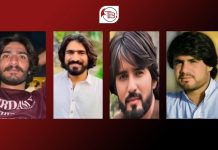
The report cited the deaths of Hamdan Baloch, a student detained in Karachi, and Israr Baloch, a tailor from Quetta, as cases of alleged custodial killing.
The BYC report also highlighted the killings of literary and academic figures in Balochistan.
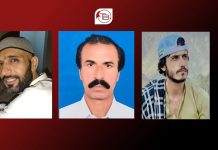
It said Professor Ghamkhwar Hayat, a Brahui-language writer, researcher and author of several books, was shot dead near Nushki on May 16, 2026. The report alleged that he had previously received threats aimed at restricting his literary and academic activities.
The killing of Baloch researcher Balach Khalid in Turbat was also among the cases documented by the organisation.
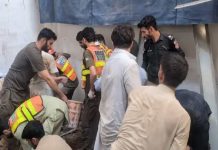
The report further alleged that at least 11 civilians, including farmers, agricultural workers and travellers, were detained during an operation in Sohinda, Zehri, in Khuzdar and taken to the Sohinda Rest House, where they were allegedly killed.
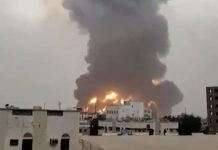
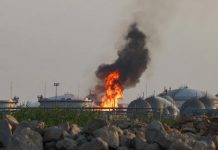
In Gwadar’s Kuntani area, the report said, several local workers were killed and wounded in firing by Pakistani Coast Guards on May 11. It also referred to the burning of oil depots in Mochan Kuppar and the resulting economic losses to local communities.
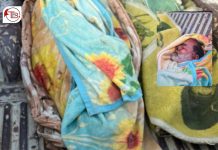
The report said that on March 31, a mortar shell struck a residential house in Kolwah, Awaran, killing Muhammad Umar, his wife Faiza and their 12-year-old daughter, Mahzaib.
It further alleged that aerial bombardment and shelling in villages in Barkhan on April 13 killed 12 civilians, including several children.
The six-month report also documented prolonged curfews, road closures and internet shutdowns in several districts, which the BYC said restricted civilians’ access to healthcare, food and other basic services.
The organisation characterised these measures as “collective punishment” and alleged violations of international human rights law and the Geneva Conventions.
The report also alleged that counterterrorism and other laws were being used against political activists and human rights defenders.
It cited legal proceedings and convictions involving Dr Mahrang Baloch and Sibghatullah Shahji, describing them as action against peaceful political activity. It also referred to proceedings against lawyer Imaan Mazari and her husband, Hadi Ali Chattha, alleging that they faced prosecution over social media activities.
The report further included allegations concerning actions against women activists, including Sammi Deen Baloch and Fauzia Baloch, as well as cases involving women allegedly subjected to enforced disappearance.
The BYC raised concerns about fundamental rights, freedom of expression, peaceful political activity and the right of families of missing persons to obtain information about their loved ones’ whereabouts.
The organisation called on the United Nations, international human rights organisations, Pakistan’s judiciary and state institutions to take notice of the human rights situation in Balochistan. It sought transparent, independent and impartial investigations into alleged enforced disappearances, civilian killings, custodial deaths and other reported violations, and called for those responsible to be held accountable.