





















During a press conference on 31 July, Pakistan military spokesperson Lieutenant General Ahmed Sharif Chaudhry spoke at length about the current situation in Balochistan, the issue of missing persons and other related matters. The military spokesperson rejected the perception that Balochistan is in a constant state of collapse or entirely engulfed by insecurity. He argued that certain quarters deliberately portray the situation in the region as worse than it is.
According to figures presented during the briefing, a total of 40,348 intelligence-based operations were conducted across Pakistan, of which more than 31,000 were reportedly carried out in Balochistan. However, these same statistics raise an important question. If the situation in Balochistan is as normal as the official narrative suggests, why has there been a need for such extensive and continuous military operations in the region? Does the sheer scale of these operations not itself indicate that Balochistan remains caught in a complex security crisis?
This is where a gap becomes apparent between the official position and realities on the ground. If large-scale operations have been ongoing for years and Balochistan still faces a fragile security situation, then the issue can no longer be viewed solely through the lens of armed conflict. Questions of state authority, political representation, human rights and public confidence have become equally important dimensions of the problem.
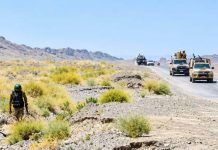
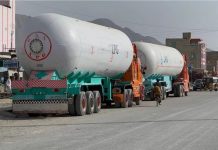
A closer and more impartial assessment of conditions in Balochistan presents a picture that differs significantly from the official narrative. Reports of attacks on Pakistani forces continue to emerge on a regular basis. Likewise, major highways across Balochistan remain vulnerable to security threats. Transporters have repeatedly parked their vehicles in protest and demanded a safer environment for travel and commerce. When the cumulative number of intelligence-based operations conducted over recent years is taken into account, it becomes evident that the state continues to face persistent challenges in Balochistan. In this context, describing the situation as entirely normal does not appear to reflect the full reality on the ground.
The ISPR attributed the deteriorating situation in Balochistan entirely to an international conspiracy. However, portraying the region’s instability solely as the result of foreign interference or external plots does not fully reflect the realities involved. The roots of the Balochistan issue are deeply intertwined with decades of political, social and national grievances. Political marginalisation, the issue of missing persons, stringent security policies adopted over different periods and broader human rights concerns are among the factors often cited as key causes of unrest in the region.
A realistic analysis of the situation therefore requires more than viewing it exclusively through the prism of external interference. It also demands serious consideration of the internal factors that have, for years, formed the basis of public grievances. Relying solely on security measures or attributing all responsibility to external actors makes it difficult to fully understand the many dimensions of the issue.
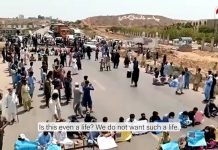
Among all the challenges facing Balochistan, the issue of missing persons remains one of the most sensitive. For more than two decades, it has been at the centre of political debate, human rights discussions and international attention. State institutions have consistently maintained that some of those reported missing have relocated elsewhere or travelled abroad. During the recent press conference, the DG ISPR reiterated the longstanding official position, stating that missing persons were members of armed organisations.
International human rights bodies have repeatedly expressed concern regarding allegations of enforced disappearances in Balochistan. The United Nations Working Group on Enforced or Involuntary Disappearances has examined numerous cases relating to Pakistan and, on several occasions, has called on the country to conduct transparent investigations into missing persons cases and provide information to affected families. Similarly, international human rights organisations such as Amnesty International and Human Rights Watch have frequently referred to allegations of enforced disappearances in Balochistan in their reports.
The issue of missing persons is not merely a political or security matter; it is fundamentally a human rights issue. It is linked to the suffering, uncertainty and anguish of thousands of families and represents a continuing human tragedy. For many affected families, such statements may be perceived as adding to their pain. If the state wishes to strengthen the credibility and acceptance of its position, it must do so not through broad assertions but through transparent investigations, verifiable evidence, impartial judicial oversight and the consistent application of the law. Otherwise, such statements risk deepening the mistrust that already exists in Balochistan while further hurting the sentiments of families who have spent years waiting for news of their loved ones.
During the press conference, the ISPR also identified certain tribal leaders and members of the tribal elite as contributing factors to Balochistan’s problems. The state has long argued that some local power brokers, alongside external actors, have played a role in perpetuating instability in the region. However, this position is strongly contested by sections of the Baloch nationalist movement.
According to these critics, many influential tribal leaders and political figures in present-day Balochistan are widely regarded as being close to state institutions and continue to occupy prominent positions within the political system. Nationalist critics argue that state policies have historically favoured political and tribal figures considered acceptable to the centre, while political voices advocating greater autonomy, greater control over local resources or a more assertive political position were marginalised. Nationalist parties and political activists further allege that political engineering in the past enabled individuals aligned with state policies to gain prominence, while dissenting voices were restricted.
With each passing day, the situation in Balochistan appears to be becoming increasingly complex. Concerns over law and order, political instability, economic deprivation and enforced disappearances have contributed to growing public frustration and a decline in trust towards the state. At the same time, critics argue that the state’s security-centred and militarised policies have deepened feelings of marginalisation and alienation among sections of the population.
If the current approach and policies remain unchanged, and if narratives continue to be constructed in ways that do not fully correspond with realities on the ground, the situation in Balochistan is likely to become even more complicated. Such circumstances could directly benefit Baloch nationalist armed groups by reinforcing the grievances on which they draw support.
Conversely, ignoring Balochistan’s political, social and national questions while attributing all responsibility to foreign actors or external conspiracies is not only an evasion of reality but also a continuation of a policy approach that critics argue has contributed to the region’s longstanding instability. Until the state acknowledges its own shortcomings and seriously addresses public grievances, political rights and demands for justice, the prospect of lasting peace in Balochistan is likely to remain elusive.