




















Author: Zamrud Baloch
I don’t really know how to begin. I have never written anything before, and I wasn’t even ready to write today because I know in my heart that I will never be able to do justice to the characters.
In the present time, there is perhaps nothing more difficult than being a Baloch. We are witnessing a world where a Punjabi student gets to dream about a good degree, a stable career, and a beautiful life. But we Baloch are left with only two choices: to become indifferent to the suffering of “Watan” and think only of ourselves, or to resist.
So many “Lals” have been sacrificed in this resistance war. It is a war we never asked for; it was imposed upon us. I wish with all my soul that my people never had to witness this. But when a Punjabi coloniser walks onto your land to slap you, what choice is left but to answer that slap with your “chawat”? But not every Baloch is willing to trade their dreams for the sake of the gun. Still, we owe it to the ones who did, the ones who chose to become the shield of this land, and every soul who poured their blood into the soil trying to bring a spring of freedom.
I picked up my pen today for a istaal of Zamuran and my fellow Gohram Baloch. I know I won’t do justice to it, but I fear that if I don’t, “Qoum” might one day forget one of its brightest stars.
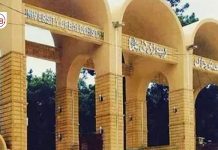
I met Gohram on my very first day at Quaid-i-Azam University. As we got to know each other through our friends, it didn’t take long to realise he was different. He didn’t care about being politically correct or whether people would judge him for his views. Even many sangats called him radical for his views.
He and I argued constantly because we had very different perspectives on everything. God only gave me three chances to sit and voice my disagreements with him. I spoke against the war, while he maintained it was the only path left for the Baloch’s survival. I spoke in favour of God; he would reply that he had yet to see a God who stood for the Baloch.
I tried to argue for every possible way for the Baloch other than violence and war because I have always been against war. But our debates always ended at the same wall. A Baloch today is either abducted, becomes a victim of target killing, lives in cold indifference, or chooses to fight against oppression. He used to say that circumstances have been pushed to the point where these are the only four options left. He once told me that in these times, the luckiest Baloch is the one who gets to decide the time, place, and date of his own death.
I remember one morning after Sahoor in Ramadan, we were talking about the war. I started crying as I was afraid that this war would eventually erase the Baloch existence. He looked at me and said, “Never. We have survived all these years. Now, we have made the enemy weak. Now, this war is in its decisive phase.”
That day he said, “If you ever hear news about me, be happy that your Sangat finally got what he desired for. Never let your heart be heavy.”
Baba Khair Bakhsh was his favourite among Baloch leaders. He quoted him constantly, urging me to read Baba so I could understand why war is the only way left for the survival of the Baloch. Life didn’t give me much time. But every time I saw him, I met him as if it were the last time because I knew that once he left, he wouldn’t be coming back. And that is exactly what happened. He left, and he never returned.
We spoke only twice after that, briefly. I told him I was tired, very tired of searching for an alternative to war for the Baloch. He said, “Don’t be tired. You still have so much time left.” But where was the time? I wanted to hold my loved ones back, yet I couldn’t. They left, gone forever, to never come back. One day I heard the news that he had been martyred. He attained what he yearned for, while those of us left behind are just here, feeling the weight of our own silence. How many of our Gohrams has this war taken? And how many more are destined to go? If we are unable to act or stand on the front lines ourselves, then the very least we owe them is to carry the memory of every life lost, to keep their names alive in our hearts.
I still say today what I have always said: I hate war. War is cruel. War is an infidel; it is faithless and godless. When has war ever been a friend to humanity? Maybe war is the punishment written for a people God has forgotten. But when the war is at your door and is imposed on you, when it is burning your home, then that same war becomes your faith. It becomes your religion, your mercy, and your only humanity. In that moment, the one who runs from the fight is the true infidel, the one without faith, the one who betrays his soul and his nation.
Disclaimer: The views and opinions expressed in this article are those of the author and do not necessarily reflect the official policy or position of The Balochistan Post or any of its editors.