
























The Wall Street Journal (WSJ) has reported that a renewed wave of militant violence in Balochistan is posing serious challenges to a planned United States investment in critical-minerals sector.
In an article published on 9 February, the WSJ said Pakistan is “slowly emerging from a financial crisis that began in 2022 amid political turmoil and the ouster of Imran Khan as prime minister,” but added that the government “has failed to stabilise Balochistan,” despite deploying security personnel to protect key projects and workers.
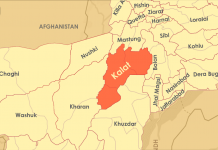
According to the report, Washington has shown interest in investing in Balochistan’s mineral resources as part of a broader effort to diversify global supply chains and reduce dependence on China. The region is home to major projects, including Reko Diq and Saindak, and holds significant reserves of copper, gold and other critical minerals.
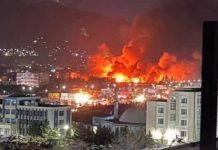
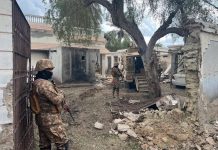
The WSJ noted that recent, coordinated attacks by the Baloch Liberation Army (BLA) have heightened concerns over security. The agency described the attacks as “highly coordinated and sophisticated”, citing Pakistani officials and security analysts.
Quoting Hussain, a Pakistani official, the WSJ reported:
“This is a test case of Pakistan’s international guarantees that we are providing an enabling environment for foreign investment on critical minerals.”
The official warned that “recurring attacks will undermine foreign investors’ confidence, whether it’s Chinese or whether it’s American or whether it’s Arab,” according to the report.
The WSJ also provided historical context, stating that the Baloch people live across Pakistan, Iran and Afghanistan, and that the incorporation of Baloch territories into the newly formed Pakistani state at the end of British colonial rule “sparked a revolt that has lasted nearly eight decades.”
The article highlighted the role of Dr Mahrang Baloch, describing her as “the most prominent female face of peaceful Baloch activism” in recent years. The WSJ reported that she has organised sit-ins and marches to draw attention to alleged human rights abuses, including enforced disappearances, and said her detention since March 2025 has “further stoked popular anger,” citing political experts.
While Islamabad maintains that security operations are necessary to protect civilians and strategic assets, the WSJ report suggests that persistent instability in Balochistan continues to complicate efforts to attract large-scale foreign investment, particularly in the minerals sector.