


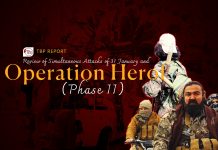

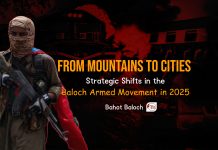





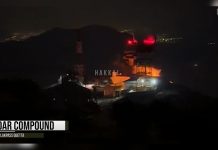

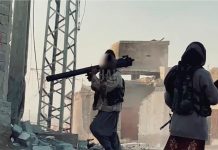


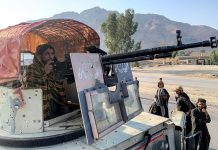







Pakistan’s defence minister, Khawaja Asif, told the National Assembly on Monday that additional military units were being deployed to Balochistan, as attacks under the Baloch Liberation Army’s (BLA) “Operation Herof” continued for a third consecutive day across multiple districts.
Speaking during the session, Asif said Balochistan’s geography made extensive deployment “unavoidable,” noting that the region comprises more than 40 per cent of Pakistan’s landmass, where “on average, one person resides every 35 kilometres,” making state control difficult.
He said the military was already stationed across the region, but that “further deployment on a significant scale” was now required.
Asif alleged that a “nexus” existed between tribal elders, criminal networks, sections of the bureaucracy and leaders of the Baloch armed movement, claiming these relationships provided protection and support to fighters.
He said the Baloch insurgency had persisted “since the creation of Pakistan,” with periods of relative calm repeatedly disrupted by cycles of armed conflict.
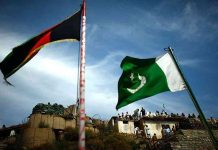
The defence minister also reiterated longstanding allegations of foreign involvement, saying elements “backed by India” were operating as proxies in Balochistan, and that groups attacking Pakistani forces were “based in Afghanistan” and receiving cross-border support.
No evidence was presented during the session.
Khan of Kalat Says Pakistan Should ‘Withdraw From Balochistan’
Meanwhile, the Khan of Kalat, Sulaiman Dawood Jan Ahmedzai, issued a sharply worded statement calling on Pakistan’s military to withdraw from Balochistan, saying such a move would be “in its own interest.”
“I advise the Pakistani military to withdraw from Balochistan as soon as possible; it is in its own interest. The Baloch nation is prepared to provide them with a safe passage,” he said.
The Khan of Kalat said prolonged war was not a solution and that Pakistan must accept that it “can no longer keep Balochistan with itself.”
He said the “entire Baloch nation” had become part of what he described as a legitimate struggle, adding that the Baloch were fighting “in self-defence” and were prepared to continue “for as long as necessary.”
He warned that the longer Pakistan pursued what he called a “lost war,” the more it would push itself “towards destruction.” A military withdrawal, he said, would allow Pakistan to stabilise its economy and “avoid losing what remains of its state.”
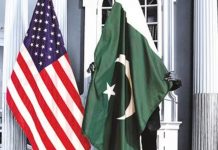
Referring to historical precedents, he said Pakistan should learn from Britain and the United States, which he argued were eventually forced to acknowledge defeat in guerrilla wars. The Baloch, he said, sought peace but were defending themselves “as they have always done,” and had now reached “a point of no return.”