















By: Abram Baloch
Introduction
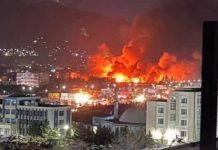
The offensive launched by the Baloch Liberation Army (BLA) at approximately 5:00 a.m. on January 31, 2026, described by the group as “Operation Herof Phase 2,” marks one of the most significant escalations in the history of the Baloch insurgency. Unfolding simultaneously across 14 cities, including Quetta, Noshki, Gwadar, Mastung, Tump, Pasni, Turbat, Khuzdar, Kharan, Dalbandin, Kalat, Uthal, Sibi, Naseerabad, and major highways in Balochistan, the operation targeted military, paramilitary, intelligence, and administrative installations throughout the region. The campaign combined suicide attacks, locally referred to as “fidayeen” attacks, with coordinated ground assaults, temporary control of urban areas, and sustained regional engagements.
The scale, coordination, and duration of the operation suggest that it was not a conventional hit-and-run guerrilla strike, but rather the product of a broader strategic shift and transformation of military power within the BLA. Multiple specialized units of the BLA took part in Operation Herof Phase 2, including the Majeed Brigade, the Fateh Squad, the Special Tactical Operations Squad, the intelligence wing Zirab, and the media wing Hakkal.
By opening multiple fronts across geographically dispersed locations, the BLA demonstrated an expanded operational reach and the capacity to conduct coordinated, multi-front engagements. The offensive underscored the group’s growing ability to challenge state authority across several key areas simultaneously.
Quetta: Breaching the Administrative Core
In Quetta, the capital and administrative center of Balochistan, the BLA carried out one of the most symbolically significant elements of the offensive. A fidayeen attacker breached outer security barriers, after which armed fighters advanced toward the heavily fortified Red Zone and other key areas of the city.
The Civil Secretariat, the Governor House, the Chief Minister House, and other core institutions of governance are located within the Red Zone. Protected by layered checkpoints, Frontier Corps deployments, surveillance systems, and rapid-response units, it is widely regarded as one of the most secure areas in Quetta.
BLA fighters gained temporary control of several major areas of the city and its surroundings, including Saryab Road, Qambrani Road, Custom Chowk, Gahi Khan, the Bypass, and the city’s entry and exit points. Even short-term control of key sections within Quetta’s administrative core carries considerable symbolic and psychological weight, challenging perceptions of unassailable state authority.
Noshki: A Strategic Corridor Under Siege
While Quetta drew significant national and international attention, the most prolonged confrontation unfolded in Noshki, approximately 150 kilometers west of the provincial capital. Fighting continued for six consecutive days, making it one of the longest sustained engagements in the recent phase of the insurgency.
Noshki holds substantial geostrategic importance. Bordering Afghanistan, it lies within the mineral-rich Rakhshan region, home to the Saindak and Reko Diq mining projects. Its proximity to major highways and resource sites heightens its strategic value.
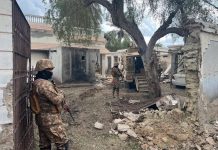
During the clashes, BLA units gained temporary control of Counter-Terrorism Department (CTD) headquarters, military checkpoints, police stations, a central prison, district administrative offices, and major highways. At the same time, control of critical road networks complicated reinforcement efforts and limited Pakistani forces’ mobility.
The duration and intensity of the Noshki engagement point to a notable shift in the BLA’s operational capacity. Sustaining combat for nearly a week suggests improved logistics, manpower coordination, and centralized command capabilities not typically associated with loosely organized, low-intensity guerrilla formations.
Gwadar: Targeting the Core of CPEC
Gwadar emerged as another critical battleground in Operation Herof Phase 2. As the centerpiece of the China-Pakistan Economic Corridor (CPEC) and Pakistan’s flagship deep-sea port project, Gwadar carries substantial economic and geopolitical significance. The city hosts Gwadar Port, CPEC-linked infrastructure, Chinese residential compounds, and maritime security installations.
At the outset of the operation, BLA units targeted Gwadar Port, military headquarters, and the Coast Guard headquarters in nearby Pasni. Several fidayeen attackers, including female fighters, were involved in operations within the port and main city areas for several hours.
Gwadar remains one of the most heavily militarized cities in the region, with naval forces, maritime security units, Frontier Corps contingents, and specialized protection divisions tasked with safeguarding foreign personnel and investments. By incorporating Gwadar into a coordinated, multi-front offensive, the BLA extended its challenge directly to the most internationally visible symbol of foreign investment in Balochistan.
Previous attacks on Chinese-linked mega-projects had already demonstrated the BLA’s opposition to Islamabad-Beijing-backed mega-projects. By including Gwadar in this broader offensive, the group reinforced its message, signaling that it intends to intensify its targeting of Chinese and other mega-projects in Balochistan.
Expanding Military Capacity
Operation Herof Phase 2 underscores a marked expansion in the BLA’s organizational sophistication. Historically, the insurgency relied on small-unit guerrilla tactics, mountainous ambushes, improvised explosive devices, and short-duration raids. While persistent, such operations were geographically limited and tactically constrained.
The January 31 offensive reflects a far more complex operational framework. Coordinated assaults across several locations require significant manpower, intelligence networks, secure communications, logistical planning, and a command structure capable of synchronizing dispersed units. The use of fidayeen attackers to breach fortified zones, followed by coordinated ground advances, suggests layered planning and disciplined military operation.
Sustained pressure in Noshki, alongside simultaneous engagements in Quetta and Gwadar, points to enhanced recruitment, improved training, and a more centralized command structure. The insurgency appears to be evolving from a fragmented guerrilla movement into a more structured organization capable of multi-front operations.
Another notable development is the increasing number of women fighters being recruited. In the recent offensive, several women, including fidayeen attackers, were present on the battlefield. Their expanded participation signals not merely a tactical adjustment, but a broader organizational shift that may strengthen both the operational capacity and symbolic reach of the insurgency.
Pakistan’s Defensive Posture
The January 31 offensive appeared to expose vulnerabilities in Pakistan’s security framework. The breach of Quetta’s Red Zone and the coordinated attacks in Gwadar challenged the perception that these high-security areas were impenetrable. The prolonged fighting in Noshki further demonstrated the difficulty Pakistan’s security forces face in regaining immediate control once insurgents establish tactical momentum.
Even short-term control of sensitive and heavily guarded areas can undermine confidence in state authority. By launching coordinated attacks in three of the most strategically important and secure locations, Quetta, Noshki, and Gwadar, the BLA demonstrated its ability to penetrate and disrupt Pakistan’s defense system.
Whether this marks a lasting shift in the balance of power remains unclear. However, the offensive clearly indicates that the BLA’s operational capability has grown in scale, coordination, and impact.
Strategic Message to Global Powers
Operation Herof Phase 2 was not only a military campaign but also a political message directed at foreign investors, particularly China. By targeting areas linked to mineral extraction, trade corridors, and flagship projects in Quetta, Gwadar, and Noshki, the BLA signaled its opposition to foreign investments that it believes strengthen Islamabad’s control over Balochistan. The attacks conveyed that projects supported by external powers cannot operate without broader local acceptance.
For China and other international investors, the offensive underscored the growing instability surrounding major development initiatives in Balochistan. It reinforced the message that foreign-backed projects remain vulnerable as long as the insurgency and political tensions in the region continue.
Conclusion
Operation Herof Phase 2 represents a pivotal moment in the trajectory of the Baloch insurgency. The simultaneous attacks across 14 cities, control over the major highways, the penetration of Quetta’s administrative core, the prolonged fighting in Noshki, and the coordinated operations in Gwadar collectively reflect a new level of coordination and strategic ambition.
Four interlinked developments emerge from this offensive: the scale of the operation, the apparent expansion of the BLA’s military capacity, emerging vulnerabilities in Pakistan’s security posture, and a calculated strategic message directed at international investors, particularly China.
Whether this escalation signals the onset of sustained higher-intensity conflict remains uncertain. What is clear, however, is that the events of January 31 have reshaped the security calculus in Balochistan. The insurgency appears to have entered a phase defined by coordinated urban operations, strategic targeting of nationally significant infrastructure, and widening regional and international implications.
Disclaimer: The views and opinions expressed in this article are those of the author and do not necessarily reflect the official policy or position of The Balochistan Post or any of its editors.