


























By Shahab Baloch
In the long and troubled history of Pakistan’s constitutional experiments, some amendments arrive quietly, slipping into the national framework with little noise. But the 27th Amendment arrived like a storm—one that threatens to redraw the country’s democratic landscape, tighten institutional control, and further marginalize the people who already stand at the political periphery.
The government’s celebration of this amendment as a structural reform is a carefully polished narrative, but beneath that surface lies a troubling truth: this is not a correction of the system; it is a consolidation of power. And every such consolidation in Pakistan has historically been felt most sharply in Balochistan, the province that has already carried the heaviest weight of central authority, militarization, and political exclusion.
A Court Above Courts: Where Power Flows in One Direction
The creation of the Federal Constitutional Court, presented as a technical restructuring, in reality weakens the only remaining institution capable of resisting overreach: the Supreme Court.
By shifting constitutional interpretation to a body whose formation leans heavily toward executive influence, the amendment dilutes the independence of the judiciary—the backbone of any democratic order. If constitutional questions are to be decided by a court aligned closely with the government, then the constitution itself becomes elastic, bending wherever power desires.
For the average citizen, this already erodes trust. For Balochistan, it is another door closing. When judges resigned in protest, it was not simply about legal philosophy. It was a warning: the balance between state and citizen has tilted dangerously.
Expanded Military Authority: A Familiar Shadow Grows Longer
Pakistan’s political history is stitched with moments when the military stepped deeper into civilian domains. But the 27th Amendment pushes this involvement into constitutional permanence. The restructuring of command and the granting of legal immunities is not just administrative; it is symbolic. It signals a country where uniformed authority is no longer answerable in the same way civilian offices are.
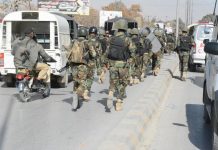
This has a direct and painful connection to Balochistan. For decades, the province has lived under a heavy security presence, often without the transparency or accountability that citizens in a democratic nation deserve. Expanding military influence at the constitutional level risks deepening the very conditions that Baloch people have long protested: enforced disappearances, disproportionate security operations, and a political environment where voices are monitored before they are heard.
When the constitution strengthens immunity, the space for dissent shrinks. And when dissent shrinks, Balochistan suffocates first.
Democracy in Form, Not in Substance
The government claims the amendment completes the constitution. But a constitution is not complete when checks and balances weaken. It is not complete when citizens lose the right to question authority. It is not complete when an entire province, rich in culture, identity, and history, remains sidelined from decisions that shape its future.
This amendment may have passed with the required numbers in parliament, but numbers alone do not represent democracy. Democracy lives in transparency, accountability, and the consent of the governed—not in hurried votes, pressured alliances, and institutions redesigned to favor power instead of people.
If a law grows stronger while the people grow quieter, it is not democracy; it is centralization.
Impact on Balochistan: The Marginalized Become More Marginalized
Balochistan has never stood on equal footing within the federation. Political representation is thin, economic benefits remain distant, and the province has lived under a disproportionate security architecture for decades.
The 27th Amendment threatens to intensify all three.
More Centralization, Less Autonomy: The amendment strengthens federal control in key areas while weakening mechanisms that allow provinces to challenge federal overreach. For Balochistan, where provincial rights are already fragile, this means further erosion of authority.
Increased Militarization of Civil Affairs: With expanded military structures at the constitutional level, the line between civil administration and security management blurs further. For a province often portrayed through the lens of law and order, this shift poses the danger of normalizing exceptional measures.
Diminished Legal Recourse: If constitutional challenges now flow through a court more aligned with the ruling power, the chances of Baloch citizens or activists receiving impartial adjudication decrease drastically. A weakened judiciary injures all Pakistanis, but for Balochistan, it is a deepening wound.
Further Silence of Political Voices: In a province where journalists, students, and activists already face pressure, a narrower democratic space means fewer platforms for Baloch grievances to be heard or acknowledged.
A Future That Demands Courage, Not Silence
History has shown that nations do not erode all at once; they erode quietly, amendment by amendment, compromise by compromise, until the people wake to find democracy standing only as a word, not a reality.
The 27th Amendment is not a step toward stability. It is a step toward a system where accountability is optional, where institutions answer upward instead of outward, and where the people—especially the people of Balochistan—become observers instead of participants in shaping their own future.
Pakistan does not need stronger hands holding power. It needs stronger voices holding power accountable.
Disclaimer: The views and opinions expressed in this article are those of the author and do not necessarily reflect the official policy or position of The Balochistan Post or any of its editors.