







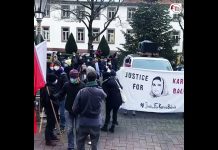




Rights groups, activists, lawyers and student organizations have issued statements expressing alarm over what they describe as a dangerous escalation in the enforced disappearances of Baloch women, warning that cases reported in recent months reflect a new and troubling phase in Balochistan’s long-running human rights crisis.
‘The Most Brutal Form of Baloch Genocide’ — BSO Azad
The Baloch Students Organization (BSO Azad) said the increasing enforced disappearances of Baloch women by Pakistani agencies constituted “the most brutal form of Baloch genocide”, adding that the silence of international human rights bodies was “deeply alarming”.
In its statement, BSO Azad said the violation of Baloch traditions, the sexual violence against women and the forced abduction of women “as a form of collective punishment” were intolerable. The organization alleged that women were being subjected to torture, fabricated charges and public humiliation through media trials, while elderly and ill women were being thrown into “torture cells”.
BSO Azad said Pakistani military institutions had been given unchecked freedom in Balochistan, accusing them of carrying out drone strikes and bombardments under “colonial narratives such as counterterrorism”.
The group said the disappearance of Baloch women marked a deliberate effort to intimidate communities, silence activists and suppress resistance. It drew a parallel with the 1971 Bangladesh conflict, saying the treatment of Baloch women reflected “the same oppressive behaviour and genocidal intent” it said was documented during the Bangladesh war.
The organization warned that Pakistan aimed to normalize grave abuses against Baloch women to avoid scrutiny. It called on international institutions to hold the state accountable “before the court of justice” and urged the Baloch nation to adopt strong resistance to ensure that political and ordinary women can live “a safe and dignified life, free from oppression and violence”.
Legal Community Condemns ‘Abduction-Style Arrests’
The Makran High Court Bar Association described what it called the “abduction-style arrests” of Baloch women as “the worst atrocity in history”, warning that Balochistan was passing through “the most delicate phase in its history”.
The Bar Association said women were now being disappeared after years in which young men were primarily targeted, calling the pattern a violation of human rights and a clear breach of the Constitution. It said any person accused of wrongdoing must be arrested according to law and presented before a court, rather than being held in “illegal detention” or confined in “torture cells”.
Referring to constitutional protections, the Bar Association reminded authorities that under Article 10 no person may be kept in custody for more than 24 hours without being brought before a magistrate. It warned that “systems built on oppression and injustice cannot survive for long” and demanded the immediate release of all missing women.
It added that if the women were not recovered or brought before courts, “lawyers across the country will be compelled to stage strong protests and exercise their constitutional and legal rights”.
‘No One Is Safe Anymore’ — Sammi Deen Baloch
Baloch Yakjehti Committee (BYC) leader Sammi Deen Baloch said enforced disappearances of Baloch women had reached a point where they were becoming “part of everyday routine”.
She said new cases were emerging in which women were taken from their homes “in front of their families, without warrants and without any charges”, adding that “what was once unimaginable has now become normalized”.
According to her, the reported targeting of underage girls, pregnant women and young mothers showed that “no one is safe anymore in the face of state violence”. She said the pattern reflected “a systematic strategy to terrorize society, silence dissent and collectively punish families”, noting that Baloch women had historically been at the forefront of resistance.
She said remaining silent amounted to complicity, urging people across the region to raise their voices and support efforts demanding the safe recovery of disappeared Baloch women.
HRCB Warns of ‘Escalating Trend’ and ‘Normalization of Abuse’
The Human Rights Council of Balochistan (HRCB) said it was gravely concerned over what it described as an escalating trend of enforced disappearances of Baloch women, warning that 2025 had marked a “disturbing shift” in which women were increasingly being directly targeted by state forces.
In a statement, the rights organization said it documented nine cases this year, involving students, health workers, activists and a minor. One woman died in custody, one was transferred to jail, two were later released, and five remain missing.
HRCB said this reflected a “dangerous expansion” of a practice that had already become “normalized” through years of disappearances and extrajudicial killings of Baloch men.
The organization said enforced disappearance had historically targeted men, leaving women to bear the consequences within families and communities. It said the extension of the practice to women represented a deliberate effort to suppress dissent, intimidate communities and undermine women-led resistance.
HRCB said the actions violated Pakistan’s Constitution and the country’s obligations under international human rights treaties, including the ICCPR, CEDAW and CRC. The organization called for the immediate recovery of all disappeared women and an end to enforced disappearance as a state practice.