









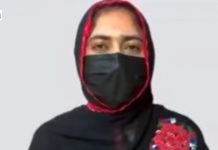





State repression in Balochistan is growing more severe by the day. Baloch leader Dr Mahrang Baloch, along with her colleagues, has been imprisoned for several months, and six months have passed since the enforced disappearance of Baloch student Mahjabeen Baloch. From the town of Hub Chowki, a young girl from Awaran, Nasreena Baloch, was forcibly disappeared from her home a week ago, while the hybrid government is placing politically active Baloch women on the Fourth Schedule in order to restrict their activities.
Baloch women have been the most active force resisting state repression in Balochistan. Despite the custodial killings of young political workers, the enforced disappearance of thousands of people, and various state restrictions, Baloch women have played a central role in mobilising public resistance politics in Balochistan. Pakistan’s powerful institutions, in an attempt to break this national and political role of Baloch women, are not only incarcerating them but are also resorting to their enforced disappearance.
The struggle of Baloch women is organising the Baloch nation politically and exposing state repression before the world. The announcement by the European Union’s ambassador, Rimondas Karoblis, that enforced disappearances will be included among priority concerns in Pakistan’s GSP+ scheme — and the EU’s repeated expressions of concern on the issue — make it evident that the world is aware of the gravity of enforced disappearances in Pakistan. This awareness has become possible due to the long, consistent struggle of Baloch women.
In Pakistan, the supremacy of law has been replaced by the rule of the state establishment, which imposes its decisions on oppressed classes and nations through the use of force. The country’s hybrid system of governance is threatened by the struggle of Baloch women and is using the enforced disappearance of women as a political weapon to obstruct Baloch resistance politics.