






















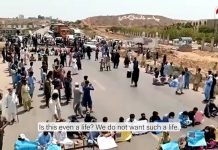





Balochistan has become an information black hole for the world, and Pakistan’s powerful circles are continually employing various tactics to maintain this state of affairs. In the country’s print and electronic media, speaking about the objective realities of Balochistan has become an undeclared crime. Journalists who write on the Baloch issue face state repression. Political activists who highlight national concerns are imprisoned, and the suspension of mobile internet has become routine to prevent the world from accessing Balochistan.
In most parts of Balochistan, internet service was already suspended, with mobile internet available only in a few major cities. However, since the evening of 6 August, citing deteriorating security conditions, a complete ban on mobile internet has been imposed across Balochistan.
According to the Human Rights Commission of Pakistan’s fact-finding report dated 9–12 July 2025, an extremely concerning trend persists in Balochistan: enforced disappearances continue, democratic freedoms are being curtailed, provincial autonomy has been further eroded, severe restrictions on journalism are in place, and a culture of impunity is running unchecked. All these factors are deepening public alienation and political instability in Balochistan.
In this age of information technology, the shutdown of internet services most severely affects students, traders, those engaged in e-commerce, mobile banking, and freelancing. However, resistance movements are not immediately impacted, as internet restrictions can only temporarily block the flow of information. Limiting access to information may delay the truth, but it cannot permanently keep the world unaware of the realities on the ground in Balochistan.