












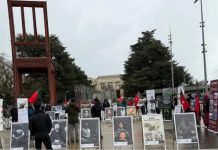

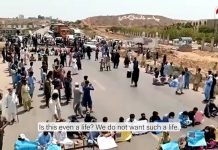


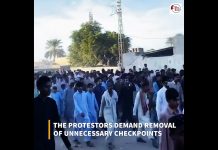


A year and a half ago, a political resistance movement emerged from the city of Turbat in Balochistan against enforced disappearances, custodial killings, and systematic state repression. That movement camped out in Islamabad for two months, demanding an end to the policies of violence and oppression inflicted on Balochistan. Now, a year and a half later, the families of the forcibly disappeared and jailed political leaders are once again staging a sit-in in Islamabad, raising their voices for the release of the very leaders who mobilized against state repression.
The same repressive tactics the state deployed against the political movement in Islamabad a year and a half ago are now being used against the families of those imprisoned leaders. For the past four days, state institutions have tried to prevent these families from protesting outside the Islamabad Press Club. Even in heavy rain, they have been denied permission to set up tents for shelter.
Balochistan’s controversial Chief Minister, Sarfaraz Bugti, and Pakistan’s former caretaker Prime Minister, Anwaar-ul-Haq Kakar, had blamed the political movement for Balochistan’s deteriorating conditions, claiming that the arrests of its leaders would restore peace to the region’s highways. Yet it has now been four months since the arrest of Baloch Yakjehti Committee leaders—Mahrang Baloch, Bebarg Baloch, Sibghatullah Shah Ji, Beebow Qambarani, and Gulzadi Baloch—and the situation in Balochistan has only deteriorated further.
Pakistan’s judiciary has proven unable, or unwilling, to meet the demands of justice. In the case of the Baloch leaders, the courts have shown clear bias and have aligned themselves with the state’s powerful institutions.
The state continues to believe that political resistance can be extinguished through brute force and authoritarian measures. But the steadfast defiance shown by these Baloch leaders, who have endured months of unlawful detention, makes one thing clear: political resistance may be suppressed temporarily, but as long as repression continues, new waves of resistance will continue to rise from Balochistan.