























The chairman of Voice for Baloch Missing Persons (VBMP) has called for the immediate release of two Baloch students who have been missing for more than two weeks after reportedly being detained by Pakistani security forces.
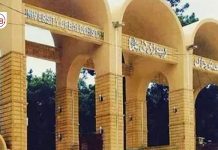
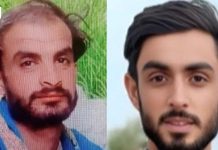
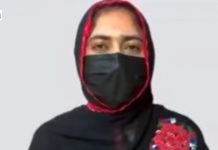
Mahjabeen Baloch, a Library Science student at the University of Balochistan, and her brother Muhammad Younus Baloch, an engineering student at Khuzdar University, were allegedly taken in separate raids in late May.
Speaking to local media on Thursday, VBMP Chairman Nasrullah Baloch described the detentions as “unlawful, unconstitutional, and a gross violation of human rights.”
“It has now been over two weeks since Mahjabeen was forcibly disappeared,” he said. “She has not been presented in any court, nor has her family been informed of her whereabouts.”
Mahjabeen, a polio survivor with a visible disability, had been temporarily staying at Quetta Civil Hospital due to a lack of space in her university hostel. She was reportedly taken during a joint raid conducted by police, Counter-Terrorism Department (CTD) personnel, and other security officials.
Her brother, Muhammad Younus Baloch, was taken from the family’s home in Basima during a night raid on 24 May—five days before Mahjabeen’s abduction.
Nasrullah Baloch said VBMP will continue to demand the safe recovery of the siblings through peaceful protests and legal avenues.
“If there are any charges against Mahjabeen, she should be presented in court and given the opportunity to defend herself,” he said. “But holding her and her brother in secret detention violates both national and international law.”
He urged members of the public to raise awareness about the case and to use social media to speak out. “If we do not speak, silence will become complicity,” he added. “This is not just about one family—it is about justice for all Baloch people.”
VBMP reaffirmed its commitment to continue its campaign until the siblings are either released or produced before a court of law.
The enforced disappearance of the siblings has sparked widespread condemnation from civil society and human rights organizations.
The Baloch Women Forum (BWF) described Mahjabeen’s abduction as part of a “deliberate campaign of violence against Baloch women.” The human rights wing of the Baloch National Movement, PAANK, called it an attack on academic freedom and part of a broader “culture of impunity.”
Amnesty International also highlighted Mahjabeen’s case, warning that the practice of enforced disappearances “runs contrary to Pakistan’s international human rights obligations.”
In its statement, Amnesty urged Pakistani authorities to conduct “prompt, thorough, and effective investigations,” disclose the whereabouts of the two students, and ensure their immediate release.