











By Asif Gichki
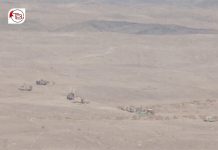
An attack on a Frontier Corps (FC) Quick Response Force (QRF) convoy in Turbat on Tuesday, September 22, initially appeared to be another armed operation in Balochistan. It drew wider attention when reports began circulating locally that a substantial number of women had taken part.
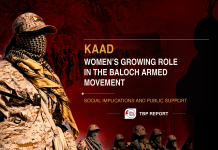
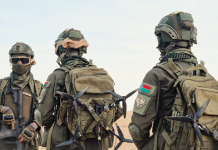
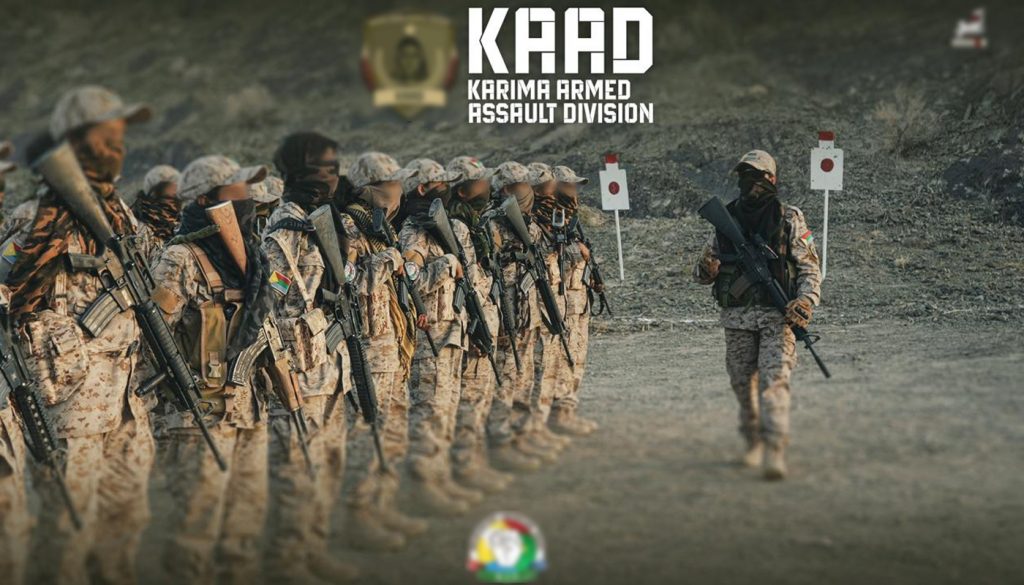
The Balochistan Liberation Front (BLF) claimed responsibility that evening and announced a new unit, the Karima Armed Assault Division, or KAAD.
“Kaad” means “young girl” in Balochi. The name, its association with Karima Baloch and the reported participation of women gave the announcement symbolic weight. But the choice of name alone does not establish the organisation’s intentions, how the unit operates or how many women belong to it.
This report examines those questions and the political legacy of Karima Baloch, after whom the unit is named. It considers how her activism influenced Baloch society and national politics, alongside women’s expanding roles in political and social movements and their place in a changing political landscape.
Who Was Karima Baloch?
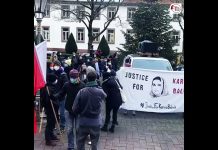
Karima Baloch, also known as Banuk Karima and Karima Mehrab, was a Baloch political and human rights activist who rose to prominence through the Baloch Students Organization (Azad). She became its first female chairperson, marking a significant development in Baloch student politics. In 2016, the BBC included her in its annual 100 Women list.
Biographical accounts give her date of birth as March 8, 1983. She came from Tump, in Balochistan’s Kech district, although some writings associated with BSO-Azad identify Dubai as her birthplace. She grew up in Tump, where she received her early education.
Members of her family were involved in Baloch nationalist politics and the armed movement. Her maternal uncle, Wahid Qambar Baloch, lived in exile in Afghanistan alongside Nawab Khair Bakhsh Marri. Qambar, a prominent figure in the Baloch nationalist movement, remains missing. His family says Pakistani forces detained and forcibly disappeared him.
Accounts of her family background also mention Dr Khalid Baloch, whom some describe as one of the BLF’s founders. He was killed alongside his companion Dil Jan Baloch in a clash with Pakistani forces in 2007.
Karima began her political activities through BSO-Azad. Biographical accounts place her involvement in the organisation from 2005 or 2006. She gradually took on greater responsibilities and was elected to its central committee.
At the organisation’s 2008 council session, she was elected junior vice-chairperson. Its chairman at the time was Bashir Zeb, who now leads the Baloch Liberation Army (BLA). She became senior vice-chairperson in 2012 and chairperson in 2015, the first woman to hold the position.
Karima moved from Pakistan to Canada in 2015 and was granted asylum the following year. She went missing in Toronto on December 20, 2020. Her family reported her disappearance, prompting a police search. Reports that her body had been found emerged on December 21, and police publicly confirmed her death on December 22.
Women have held prominent places in Baloch history, from figures remembered in historical accounts to contemporary political leaders. Against that background, The Balochistan Post asked the BLF why it had chosen Karima’s name for its new unit.
In its written response, the organisation referred to the “sher zaal”, or courageous women, remembered for their contributions to social and military affairs. It said women had played an increasingly visible role in political and human rights movements since the current phase of the Baloch independence movement began at the start of the century.
Several women had emerged as prominent leaders during that period, the BLF said, but Karima’s influence extended beyond her position at the head of BSO-Azad. It credited her with mobilising the public, particularly women, through peaceful political activity and representing the Baloch movement at international forums.
“Through her leadership, active role and unwavering determination, Karima Baloch not only became chairperson of the Baloch Students Organization but also played a leading role in inspiring and mobilising the Baloch people, particularly women, on the movement’s democratic front,” the organisation said.
The BLF described her as a role model in Baloch society and a prominent representative of the movement in diplomatic circles.
“Karima Baloch’s entire struggle was democratic and peaceful. Yet the occupying Pakistani state pursued her abroad and killed her,” it alleged.
The organisation argued that her death demonstrated what it described as the Pakistani state’s refusal to distinguish between men and women, or between peaceful and armed methods, when confronting Baloch demands for independence.
“The purpose of forming this unit in Karima Baloch’s name is to pay tribute to her distinctive historical role, determination and sacrifice in the independence movement,” it said.
The BLF added that the unit was intended to remind Baloch people of its argument that the state targets those seeking independence regardless of their gender or methods of struggle. It urged men and women alike to participate across all fronts of the movement and play their part in ending what it described as subjugation.
The Changing Role of Baloch Women
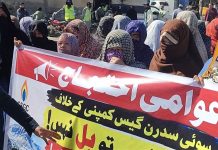
Women have long played a prominent role in Balochistan’s political, social and national movements. They have campaigned against human rights violations and enforced disappearances, sought the recovery of missing people and participated in political resistance and public activism.
Through protests, rallies, press conferences and public gatherings, they have brought Balochistan’s concerns to national and international attention.
In recent years, however, women’s participation in Baloch armed organisations has added a new dimension to that role. Their involvement has extended beyond isolated cases, with successive reports of women taking part in combat, carrying out suicide attacks and joining organised military structures.
These developments have prompted debate about the relationship between Baloch nationalism, gender roles and armed struggle.
TBP asked the BLF what prompted the formation of the Karima Armed Assault Division and why the organisation considered it necessary.
The BLF said women constituted half of any nation’s population and had historically contributed to independence movements. Baloch history, it added, included both prominent women and many whose roles in armed struggle remained unrecorded.
Excluding half the population from the military front amounted to a national loss, the organisation argued. It said KAAD had been formed to address that exclusion and meet what it described as a historical need within the movement.
Shari Baloch: A Turning Point
The BLA’s identification of Shari Baloch as the attacker in the April 26, 2022, suicide bombing at the University of Karachi brought women’s participation in the Baloch armed movement to national and international attention.
The attack targeted a vehicle carrying Confucius Institute personnel. The BLA claimed responsibility and named Shari, who became the first widely known woman to carry out a suicide attack in the movement.
Women were already prominent in Baloch political and social activism, but the Karachi attack placed their direct involvement in armed operations at the centre of the discussion. Debate extended to the ideological reasons women were joining armed groups, how their participation fitted into organisational strategies and the consequences for Baloch politics and society.
Subsequent BLA announcements described the involvement of other women, both younger and older, including in the two phases of Operation Herof. The operation began in August 2024, bringing wider attention to the scale of armed activity in Balochistan.
During its first phase, Mahal Baloch carried out a suicide attack as part of an assault on a Pakistani forces camp in Bela, according to the BLA. The organisation later announced that six women had participated in the second phase.
The BLF’s First Announced Female Suicide Attacker
An armed assault targeted the Frontier Corps headquarters in Nokundi, in Balochistan’s Chagai district, on November 30, 2025. The BLF claimed responsibility and identified one of the suicide attackers as Zareena Rafiq, saying she belonged to its Saddo Operational Battalion.
It was the first time the organisation had publicly identified a woman as a suicide attacker, marking a significant development in women’s participation in its operations.
TBP asked the BLF whether the idea for KAAD emerged after Shari Baloch’s attack in April 2022 or had already been under consideration.
The organisation said it had long envisaged a role for women on the military front of the Baloch independence movement. In 2013, it said, its Supreme Command Council established a consultative council to prepare proposals, advice, analyses and reports on political, social, military and other national affairs.
The BLF said women served on that council, adding that a woman was also elected to its Supreme Council in 2015.
The Balochistan Post could not independently verify these claims.
How Pakistani Analysts View Women’s Participation
Baloch women’s political activism extends well beyond their recent participation in armed organisations. Their work in education, social rights, political organising and campaigns for missing people has shaped debate within Balochistan and brought its concerns to national and international attention.
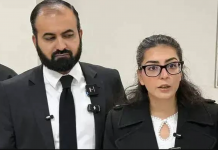
Against that background, this report also considers assessments by Pakistani researchers, commentators and security specialists, including security analyst Amir Rana and commentators Moeed Pirzada and Wajahat Hussain Syed.
Rana argues that women’s growing participation may indicate that a movement’s influence is spreading beyond a narrow constituency into wider sections of society. In his assessment, the state’s response needs to address social grievances and public trust alongside security concerns.
He has also warned that ill-considered measures and gender-based discrimination could further complicate the situation. Pirzada and Syed have similarly described women’s increasing participation in Baloch armed groups as a serious challenge for the Pakistani state and military.
Social Attitudes, Cultural Barriers and Possible Implications
Political and social changes rarely produce a uniform response. Support and criticism are shaped by a society’s history, culture and political experience, and women’s growing participation in the Baloch armed movement is no exception.
Understanding this development therefore requires looking beyond the accounts offered by armed organisations themselves. The views, concerns and expectations of different sections of society are also important to assessing its significance.
Alongside its questions to the BLF, TBP spoke to political and intellectual figures about women’s participation in armed activity. These conversations explored how different circles viewed the development, the social and political factors behind it, and its possible effects on Baloch society and the movement.
Several of those consulted expressed support. Others raised concerns about the social implications, whether this participation could be sustained and what its longer-term consequences might be.
The Regional and Cultural Context
Balochistan extends across Pakistan, Iran and Afghanistan, three Muslim-majority countries where religion and tradition shape expectations of women’s roles. Women are often expected to focus on home and family, making their direct involvement in armed activity an unusual step.
Has that environment created obstacles for Baloch women joining the armed movement? TBP put the question to the BLF.
The organisation disputed the idea that a shared religion made these societies alike. It argued that the dominant national groups in each country had their own histories and traditions, as did the Baloch. Baloch attitudes, it said, needed to be understood through that distinct experience.
The BLF also pointed to women’s participation in Afghan and Iranian struggles against outside powers and their service in Pakistan’s military. It argued that religion and regional culture alone could not explain whether women took part in military activity.
The organisation said it had faced no fundamental cultural or regional obstacle to women joining the Baloch armed movement.
The BLF’s position, however, addresses only part of the question. An organisation’s willingness to accept women into its ranks does not establish how widely that decision is accepted outside it. Family expectations, traditional attitudes and views about women’s place in society also shape that response.
Has Baloch Society Accepted Women’s Participation?
The response to women’s political leadership suggests that a substantial section of Baloch society has accepted and supported their growing role. Karima Baloch’s leadership of BSO-Azad and the public mobilisation led by Dr Mahrang Baloch offer two prominent examples.
When Karima was elected chairperson, BSO-Azad was among the largest Baloch student organisations, with thousands of members, most of them men. Those members continued their political activities under her leadership. Her election represented more than women’s representation within the organisation: it placed a woman at the head of a student movement long dominated by men.
Mahrang’s calls for protests, rallies and public gatherings have likewise drawn hundreds of thousands of people. Participants turned out despite difficult political conditions and restrictions imposed by the authorities, showing both acceptance of her leadership and a willingness to act on her appeals.
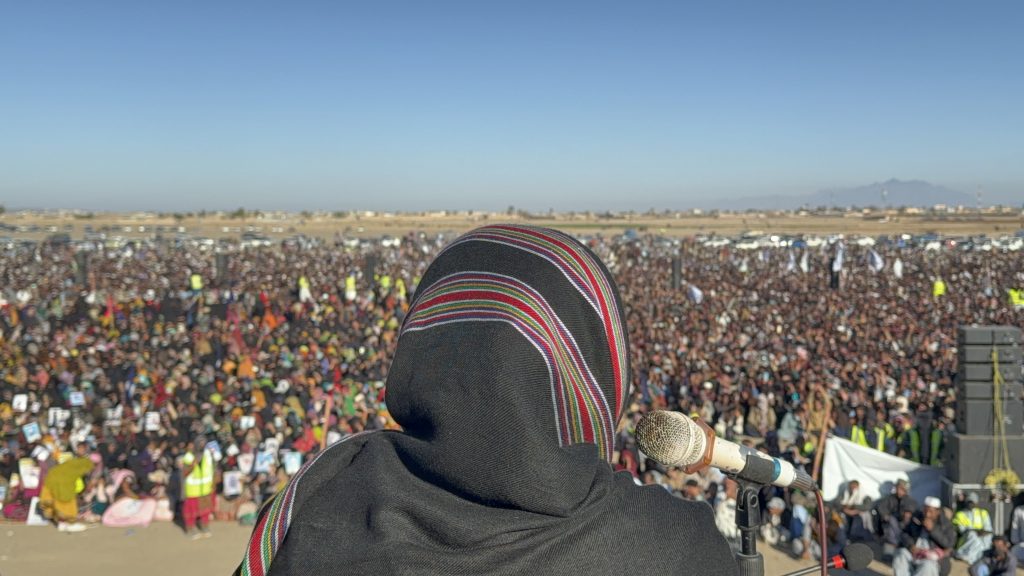
The response to women’s armed participation has included criticism on social media and in political and social circles, particularly over its wider consequences. However, that criticism has not developed into a prominent organised political or religious campaign against women joining the armed movement.
These responses suggest that acceptance of women’s participation in Baloch national life is widening, with indications that it extends to armed activity. The social and political consequences remain contested, but women’s expanding roles have not produced the broad organised opposition that might otherwise have limited that change.
Concerns About Women’s Armed Participation
Many of those who spoke to TBP supported women’s growing participation in the armed movement. Others raised concerns that centred less on opposing their involvement than on their safety, rights and the possible consequences for society.
One concern was the treatment women could face. Respect for women holds particular importance in Baloch culture, and some feared that enforced disappearance, abuse in custody, torture or harassment could have repercussions extending beyond the women themselves to their families and wider communities.
These concerns carry particular weight in Balochistan, where enforced disappearances and human rights violations are already serious issues. Women’s increasing participation in armed activity makes questions about their protection and treatment more pressing.
There are also questions about how armed organisations manage women’s participation. What safeguards do they have to protect women’s rights, safety and dignity? How would they respond if abuse or other serious incidents occurred?
These are organisational responsibilities with consequences beyond individual decisions to join. They affect families, relationships within communities and the wider social fabric.
Baloch armed organisations therefore bear a significant responsibility to manage this change, safeguard women’s rights and safety, and ensure that their decisions do not undermine the social fabric of Baloch society. The significance of such a development depends not only on how it begins, but also on the responsibility and seriousness with which it is taken forward.
Conclusion
Women’s participation in Baloch armed organisations remains a relatively recent development, attracting both support and criticism. It is still too early to draw firm conclusions about its political, social and historical consequences.
Much will depend on how these organisations develop women’s roles, protect their rights and safety, and respond to the effects of their participation on Baloch politics and society.
The broader principle of equality, however, remains important. A society committed to equality must recognise women as equals and make room for their participation in all areas of life. Giving women equal opportunities in politics, social movements and other fields is an important step towards that goal.