





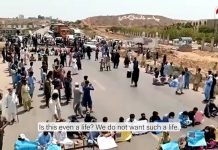
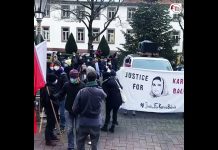
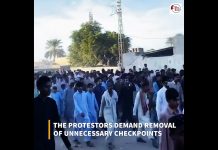


Families of Baloch missing persons staged a protest outside the Karachi Press Club against what they described as a “fake encounter,” alleging that a young man who had previously been forcibly disappeared was later killed in a staged police operation and that authorities are now refusing to hand over his body to relatives.
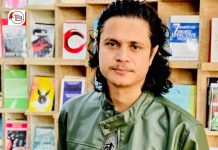
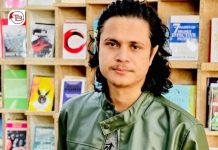
A large number of women and children participated in the demonstration, holding placards and demanding justice. Protesters said 24-year-old student Hamdan Baloch s/o Muhammad Ali, a resident of Golimar, was subjected to enforced disappearance before being killed in what they termed a “fabricated encounter.” According to the family, despite identification, the authorities have not released the body to the relatives.
Speaking to media representatives at the protest, Hamdan’s father Muhammad Ali said his son was taken into custody by Counter Terrorism Department (CTD) personnel on December 29, 2025, near Dhobi Ghat Bridge without a warrant. He said the detention was followed by weeks of disappearance during which the family received no information regarding his whereabouts. The father described the incident as a clear case of enforced disappearance.
According to the family, on January 6, 2026, CTD officials held a press conference claiming Hamdan had been arrested from Raees Goth on suspicion of links with an armed organization and alleged facilitation activities. The family rejected the claim, maintaining that Hamdan had been detained earlier from Dhobi Ghat and that the allegations were fabricated.
The family said they pursued legal remedies following the charges and attended multiple court hearings. They stated that Hamdan’s final court appearance was scheduled, after which he was to be transferred to jail custody. However, on Tuesday, CTD issued a statement claiming Hamdan was killed during an armed encounter and had died due to firing by his own associates. Muhammad Ali said similar explanations had been used in previous cases and questioned the credibility of the official account.
Family members said they later identified Hamdan’s body but faced obstacles in obtaining custody of the remains. According to them, Edhi officials informed the family that the body could not be handed over without authorization from CTD, while officials allegedly continued delaying the process. The family further alleged that they were being pressured to sign a document declaring Hamdan a terrorist as a condition for releasing the body, which they refused.
During an emergency press conference, relatives described the sequence of enforced disappearance, terrorism allegations, and subsequent encounter killing as serious violations of law and human rights. They demanded registration of a criminal case against CTD officers involved, an immediate and transparent post-mortem examination, and continuation of legal proceedings related to the case so that facts could be established through judicial process.
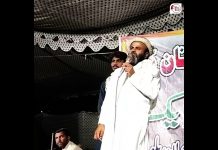
At the protest site, Baloch Yakjehti Committee leader Fauzia Baloch said the group would not remain silent over the incident. She said the pattern of enforced disappearance followed by terrorism accusations and eventual encounter killings appeared to place actions beyond legal accountability. She called for an impartial investigation and an independent autopsy to determine the circumstances of death.
Protesters warned that demonstrations would expand if their demands were not addressed.
In a separate statement, the Baloch Yakjehti Committee expressed serious concern over the killing, stating that Hamdan had remained missing since December 29, 2025, and that his family had received no information about his condition or location during that period. The committee said the later claim that he died in an armed exchange raised serious legal and factual questions because, according to relatives, he had already been in state custody.
The committee added that similar incidents had been reported in Karachi and across Balochistan, where individuals allegedly taken into custody later appeared among those killed in encounter operations. It described the pattern as indicative of enforced disappearances and extrajudicial killings carried out under the cover of counterterrorism operations.
According to the committee, killing a person who was already in state custody and presenting the death as the result of an armed clash would constitute a violation of international human rights law, including Articles 6 and 9 of the International Covenant on Civil and Political Rights (ICCPR), which protect the right to life and safeguard against arbitrary detention.
The group urged international human rights organizations, civil society, and humanitarian bodies to intervene, alleging a continuing pattern of encounter killings, recovery of mutilated bodies, and targeting of young people. It said meaningful accountability and independent investigations were necessary to prevent recurrence of such incidents.
The family appealed to civil society organizations, lawyers, human rights defenders, and the wider public to raise their voices over the case, saying accountability was essential to ensure that other families do not face similar circumstances in the future.