















The Baloch Liberation Army (BLA) has continued releasing profiles of its members who took part in its most recent campaign, publishing new details about two fighters killed during fighting on the Noshki front in the second phase of “Operation Herof.”
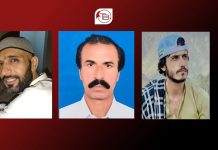
In a statement shared through its official media channel “Hakkal,” the group released photographs and biographical accounts of Fateh Squad member Saif Jan Sumalani alias Aajiz and regional commander Jafar Mengal, alias Comrade Sameer, both of whom the organization said were killed during clashes with Pakistani forces earlier this month.
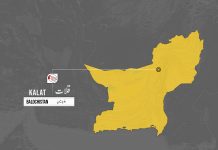
According to the BLA, Saif Jan Sumalani, a resident of Bolan, participated in operations on the Noshki front alongside his mother, Hatam Naz alias Gul Bibi, the group’s 60-year-old female ‘fidayee.’ The organization said Sumalani had been active on multiple fronts, including Bolan and Kalat, where he served as a committed member of the Fateh Squad.
The group stated that intense fighting took place during the second phase of “Operation Herof,” during which Sumalani was killed while continuing to fight until the final moments of the clashes. The BLA framed his death alongside that of his mother, saying both had taken part in separate operations tied to the same campaign.
In its account, the organization said Hatam Naz joined the BLA in 2015 and was wounded during an operation the following year. It further claimed she was later abducted by state authorities and remained missing for four months. According to the statement, she joined the Majeed Brigade as a fidayee member in January 2023 while in her sixties.
The BLA described the deaths of the mother and son as a defining episode of the operation, portraying their participation as symbolically linked despite serving on different fronts.
The statement also detailed the role of regional commander Jafar Mengal, a resident of the Sariab area of Quetta, whom the group said held a postgraduate education in political science before joining the organization. Rather than pursuing what it called a conventional professional path, the statement said Mengal chose armed struggle as a political and ideological commitment.
According to the BLA, Mengal rose quickly within the organization and assumed command responsibilities on key fronts of the Majeed Brigade within two years of joining. The group said fellow members viewed his leadership as disciplined and strategically focused.
During the second phase of “Operation Herof,” the organization claimed Mengal led five days of continuous clashes targeting sensitive locations in Noshki, including an ISI office, Frontier Corps headquarters, and a bus terminal headquarters. The statement said he moved between positions during the fighting to support other units and helped secure the withdrawal of fellow fighters after the operation concluded.
The BLA said Mengal was killed while providing cover to retreating members, remaining behind during the final stage of disengagement. It described his death as occurring after ensuring other fighters had safely withdrawn from the area.
Beyond combat operations, the group said Mengal played a central role in organizational training, planning, and ideological instruction. It attributed the planning of several missions in Kharan, Dalbandin, and Noshki headquarters areas to his supervision, adding that he trained recruits not only in weapons use but also in political awareness and internal discipline.
The releases form part of an ongoing series in which the BLA has been publishing accounts of participants involved in the second phase of “Operation Herof,” which the group announced on January 31st as a coordinated campaign across multiple districts.