






















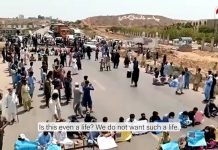





The Baloch Yakjehti Committee (BYC) has released a thematic report documenting what it describes as a disturbing pattern of enforced disappearances of Baloch women and girls in Balochistan during 2025, alleging the use of collective punishment and gender-based human rights violations.
Titled “Enforced Disappearances of Baloch Women in 2025: Collective Punishment and Gender-Based Human Rights Violations in Balochistan,” the report states that at least 12 Baloch women and girls were forcibly disappeared across different districts of Balochistan over the course of the year. According to BYC, these cases do not represent isolated or accidental incidents but instead point to a systematic practice in which enforced disappearance is used as a tool of repression.
The report highlights that the victims included female students, lady health workers, minor girls, and an eight-months pregnant woman. In several cases, more than one member of the same family was targeted during a single operation, causing long-term psychological, social, and economic harm to entire families and communities.
According to the documentation, all the recorded cases involved women being taken into custody without arrest warrants, judicial oversight, or legal justification. The report alleges that state institutions repeatedly denied holding the women or refused to disclose their whereabouts. While some women were later released, this reportedly occurred without any formal charges, court proceedings, or official explanations, which BYC says constitutes a continuing violation of international human rights law.
The report also draws attention to what it describes as an especially grave case from Panjgur, involving Nazia Shafi, who was allegedly subjected to severe torture and sexual abuse after her enforced disappearance. She later died from her injuries. BYC states that the case amounts to an extrajudicial killing and represents one of the most serious forms of human rights abuse.
In addition to enforced disappearances, the report alleges a broader pattern of intimidation, including raids on homes, threats to family members, restrictions on movement, damage to property, and abductions from public places, which it says are aimed at instilling fear and silencing dissent.
BYC concludes that the enforced disappearances of Baloch women in 2025 reflect a deliberate policy of state repression and collective punishment, in violation of international human rights conventions to which Pakistan is a party.
The committee has demanded an immediate end to enforced disappearances in Balochistan, the unconditional release of all disappeared women, and official acknowledgment of all cases along with disclosure of the victims’ whereabouts. It has also called for independent, transparent, and impartial investigations, accountability for those responsible, and the provision of psychological, medical, and legal support to affected families.
BYC has further appealed to the United Nations and international human rights organisations, including global watchdogs, to urgently take notice of the situation of Baloch women in Balochistan and to take concrete steps to prevent further violations.