









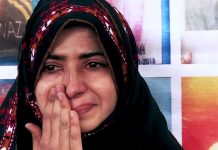













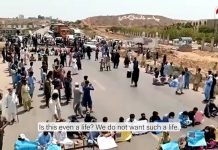
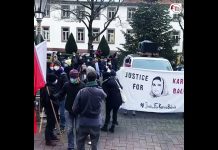




Families of Baloch missing persons held a peaceful protest outside the Quetta Press Club on Saturday, calling on authorities to disclose the whereabouts of their loved ones.
Participants said the demonstration aimed to draw the attention of senior officials and relevant institutions to what they described as a “serious humanitarian crisis”, with dozens of families experiencing “severe mental anguish” for years amid continuing cases of alleged enforced disappearances.
Families said the issue was not only a human tragedy but also raised fundamental questions about human rights, constitutional guarantees and the rule of law. They said the practice of detaining citizens without legal basis, and keeping families uninformed, was “unacceptable” and contrary to basic standards of justice.
Protesters said no verified information was being provided about the missing persons and that none had been produced before a court. They described the prolonged uncertainty as a source of ongoing psychological distress.
The families appealed to the international community and global human rights organizations to take notice, saying local institutions had failed to address their concerns. “When our voices are ignored at the local level, international justice becomes our last hope,” they said.
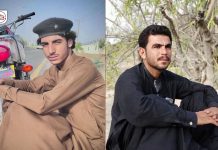
Meanwhile, the Voice for Baloch Missing Persons (VBMP) confirmed on Saturday that Shehzad Munir, a resident of Heronk who was allegedly forcibly disappeared from Quetta on 5 November 2025, had been released. His family had earlier blocked the M-8 highway in Kech district to demand his return.
The latest protests follow a separate three-day sit-in earlier this week, when the CPEC highway in Tejaban, Kech district, remained blocked over the alleged enforced disappearance of four members of the same family, including two women.
The sit-in ended on Thursday evening after Deputy Commissioner Kech, Bashir Ahmed Barech, assured the families that efforts were under way for the “early recovery” of the missing individuals.
Reacting to the disappearances of two women, journalist and Human Rights Commission of Pakistan (HRCP) co-chair Munizae Jahangir said the cases constituted “a serious crime under Pakistani law as well as international law”, warning that the targeting of a pregnant woman and a 17-year-old girl had “increased public mistrust” toward state institutions.
“When someone becomes a victim of enforced disappearance, it places the family under immense distress and creates resentment among the people of Balochistan toward the state,” she said. “Pakistan already has a judicial system. If someone is suspected of wrongdoing, the state has the right to arrest them through legal means.”
“Acts of enforced disappearance are condemnable, as they are violations of Pakistan’s Constitution and international human rights,” Jahangir said.