















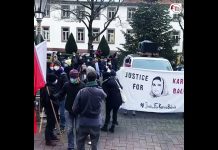
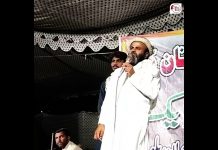



The Baloch National Movement (BNM) organised a seminar in London to commemorate the fifth death anniversary of former BSO Azad chairperson and party leader Karima Baloch.
According to a statement issued by the BNM, the event was attended by political leaders, intellectuals, human rights activists, and representatives of other “oppressed” nations. Participation by members of Sindhi, Pashtun, Kashmiri, and Gilgit-Baltistan communities was described as a symbol of unity among “oppressed” peoples.
The programme was moderated by BNM members Mahganj Baloch and Dareen Baloch, who welcomed the guests and participants.
At the start of the seminar, attendees observed a one-minute silence in remembrance of Karima Baloch’s life, struggle, and sacrifice. Baloch women then came onto the stage to pay tribute. Flowers were laid on her portrait, created by artist Sanji Baloch, and candles were lit in her memory.
A short documentary titled “Karima Baloch: Life, Struggle, and Legacy” was subsequently screened. The film highlighted her political journey, fearless leadership, and enduring legacy as a global symbol of resistance.
The seminar also featured the launch of a book published by Zrumbesh Publications titled “Karima Baloch: From Student Leader to a Global Symbol of Resistance.” At the conclusion of the programme, a tribute song dedicated to Karima Baloch was presented, produced by the media cell of BSO Azad.
Speakers at the event included BNM Chairman Dr. Naseem Baloch, author and political analyst Dr. Naseer Dashti, University of London scholar and SOAS South Asia Centre member Burzine Waghmar, World Sindhi Congress (UK & Europe) Deputy Organiser Fahmeeda Khushk, human rights activist Noor Maryam Kanwar, Pashtun Tahafuz Movement representative Barkhana Syed, and Karima Baloch’s cousin, Mehlab Kambar.
In his address, Dr. Naseem Baloch described Karima Baloch as a leader with exceptional political insight and consciousness. He said that although the sufferings of Baloch, Sindhi, Pashtun, and Kashmiri nations may appear different, their root cause is the same – “a Punjabi-dominated military state that calls itself Pakistan”, he said.
He stressed that Karima Baloch’s exile was imposed on her and was not a personal choice. Despite this, he said, she continued her struggle for dignity and freedom for her people. According to Dr. Naseem Baloch, her life and death exposed the “colonial nature” of the Pakistani state and its “systematic repression of oppressed nations.”
He also criticised Western governments for the selective application of human rights principles, questioning why “occupation” and “repression” are condemned in some regions but ignored in Balochistan and other “oppressed” areas. He said Karima Baloch challenged not only “military occupation” but also the control over history, language, resources, and political authority. He concluded by stating that freedom is not extremism but a natural human instinct, and that peace in the region is impossible without “dismantling Pakistan’s colonial structure and ensuring freedom for oppressed nations.”
Author and political analyst Dr. Naseer Dashti said Karima Baloch would be remembered as a pioneer who transformed the foundations of the Baloch national struggle. He compared her historical role to that of Nawab Akbar Bugti and said she inspired a new generation, particularly Baloch women, to actively participate in politics and resistance.
Dr. Dashti added that today’s Baloch leadership must make courageous and principled decisions, adapt to changing global conditions, and work towards unity and dignity for the nation.
University of London scholar Burzine Waghmar strongly criticised Pakistan’s human rights record and held the country’s “deep state” responsible for Karima Baloch’s killing. He said Pakistan exploits international indifference and impunity to target peaceful activists, even in exile.
He also questioned the failure of Canadian authorities to conduct a transparent investigation into her death and highlighted the role of international interests in the “exploitation” of Balochistan’s resources. Waghmar warned that silence over such crimes is often bought through financial and political collusion.
World Sindhi Congress Deputy Organiser Fahmeeda Khushk said Karima Baloch played a central role in mobilising Baloch youth and raising global awareness about enforced disappearances and extrajudicial killings. She said Karima’s struggle transcended gender and geography, and that her death represents a shared loss for both Baloch and Sindhi nations.
Human rights activist Noor Maryam Kanwar described collective punishment as one of the most brutal methods used against the Baloch people. She referred to the enforced disappearance of the father of human rights activist Mahzaib Shafiq, stating that the state targets families to suppress resistance movements.
She described the Baloch Women’s Red March as a continuation of Karima Baloch’s struggle and said Karima provided guidance to women organisers even during periods of intense pressure.
Pashtun Tahafuz Movement representative Barkhana Syed expressed solidarity with the Baloch struggle and said enforced disappearances and collective punishment have become a daily reality in Pashtun regions as well. She described Karima Baloch as a symbol of hope who challenged “patriarchal barriers” and confronted “state repression” with courage.
She rejected official narratives surrounding Karima Baloch’s death and said her killing stands as a symbol of resistance against “oppression” and international silence. She added that Karima organised rallies and protests for enforced disappearances and consistently raised her voice against what she described as “Baloch genocide.”
Barkhana Syed further said that Karima encouraged collective participation and worked tirelessly for a better future for the Baloch nation. She noted that Karima was born into a politically conscious family, where her uncle Wahid Kambar and Dr. Khalid devoted their lives to the national struggle.
Despite repeated state raids and threats, she said, Karima remained a source of strength, resilience, and courage for her family and the wider movement.
Karima Baloch’s cousin Mehlab Kambar said her presence, leadership, and unwavering commitment made her a central figure in sustaining and advancing the Baloch movement.