
























By Saeed Buzdar
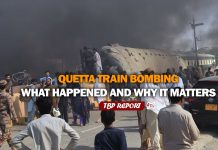
The 2 September 2025 suicide attack on the Balochistan National Party-Mengal (BNP-M) rally in Quetta, which killed at least 14 people and injured over 30, exposes the deep and dangerous security vacuum Pakistan has allowed to fester in Balochistan. The Islamic State Pakistan Province (ISPP), a Sub-branch of ISIS-Khorasan Province (ISKP), claimed responsibility. This was not an isolated incident but the outcome of years of Pakistan’s policies that have destabilized Balochistan and provided fertile ground for international terrorist outfits.
For decades, Pakistan’s military establishment has cultivated, sheltered, or selectively tolerated jihadist groups as instruments of regional policy. Yet, these same forces have now turned inward, directly targeting ethnic nationalists, progressives, and critics of the state. ISKP’s propaganda, particularly the booklet Qaumiyat Ka Fareb (The Deception of Nationalism), makes clear that Baloch, Pashtun, and progressive voices are seen as threats equal to, if not greater than, foreign powers. The overlap between ISKP’s declared enemies and Pakistan’s own adversaries—BNP-M, BYC, PTM, PKMAP—raises the uncomfortable question: who benefits when these groups are silenced?
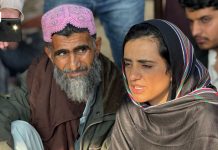
The Quetta bombing is the latest in a pattern. From the March 2025 attempt on BNP-M leaders in Mastung, to ISKP’s explicit threats against the BLA, BLF, and BYC, the militant agenda appears increasingly aligned with Pakistan’s long-standing campaign to weaken Baloch resistance. Documents recovered in Kabul during an operation against ISKP by Afghanistan’s General Directorate of Intelligence (GDI) last year revealed that ISKP had drawn up a hitlist of prominent critics of Islamabad, including Akhtar Mengal and Dr. Mahrang Baloch. It is difficult to ignore that these very individuals are also the central civilian opposition to Pakistan’s military dominance in Balochistan.
Reports of Baloch fighters allegedly destroying an ISKP camp in Mastung, killing dozens of foreign fighters, show that nationalist groups are not aligned with international jihadism but directly opposed to it. Yet, rather than protecting its citizens, Islamabad has repeatedly prioritized suppressing nationalist movements over dismantling transnational terrorist infrastructure. This selective approach has created space for ISIS to thrive in Balochistan, turning it into a new front in their war.
By amplifying ISKP propaganda that condemns nationalism, Pakistan gains plausible deniability. Attacks on nationalist leaders can be blamed on ISIS rather than on the state or its “death squads.” Yet, whether through complicity or incompetence, Pakistan’s security establishment has enabled a situation where nationalist voices are under existential threat. At the same time, ISIS expands its influence both militarily and digitally in Balochistan.
The Quetta attack is not just an act of terrorism. It is part of a broader convergence of interests between Pakistan’s establishment and ISIS affiliates in silencing dissenting, pro-independence, and democratic Baloch voices. Unless this nexus is broken, Balochistan risks becoming not just a battleground between nationalists and the Pakistani military, but also a staging ground for international jihadists who exploit the very chaos Pakistan has engineered.
Disclaimer: The views and opinions expressed in this article are those of the author and do not necessarily reflect the official policy or position of The Balochistan Post or any of its editors.