









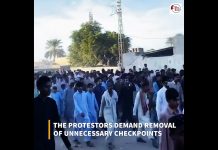


A 28-year-old farmer was killed and another man injured when Pakistani military personnel opened fire at a checkpoint in Dalbandin, the Baloch Yakjehti Committee (BYC) said on Thursday.
In a statement, the BYC identified the man as Yasin Baloch, son of Muhammad Ghaus, a resident of Zahoor Colony in Dalbandin, and said he was killed on October 5 while passing through the checkpoint.
His companion, Sami, was injured in the firing, it added.
The statement said Yasin was the only son of his parents, who had already died, and the sole breadwinner for his family. He had been supporting his two sisters, who were now left without the brother responsible for their household, it said.
The BYC said the incident reflected what it described as the continued use of force against civilians in Balochistan, adding that people faced violence even while travelling through areas controlled by Pakistani forces.
It said checkpoints were established for security but had become places where Baloch families faced “humiliation, harassment and killings”.
The group said the unchecked use of military force had created an environment in which Baloch people could not feel safe “in their own homes and homeland”.
The incident comes amid other reports of civilian casualties allegedly caused by Pakistani forces in Balochistan.
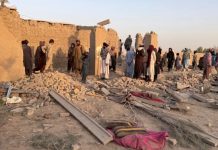
On October 3, two children were killed and three others injured in Fateh Ali Bazaar, Gowargo, Panjgur. Local sources said the children were playing when a suspicious object hanging from a tree exploded, later alleging that it contained explosives fitted to a Pakistani military quadcopter.
Read More: Two Children Killed by Explosives Fitted to Pakistani Military Quadcopter in Panjgur, Sources Say
The BYC described the Panjgur incident as another example of what it called “collective punishment and state terrorism” in Balochistan.
The committee called on the international human rights community to take notice of both the Dalbandin and Panjgur incidents, demand independent investigations and hold those responsible accountable. It also called for an end to military operations and what it described as “collective punishment, state terrorism and genocide” in Balochistan.