














Markets and roads were closed across several districts of Balochistan on Tuesday, while bus operators announced a three-day suspension of services and railway officials curtailed a passenger train route amid heightened security measures, local and transport sources said.
Noshki’s main market and adjoining entry and exit routes were closed, while a heavy contingent of Pakistani forces was deployed across the area, local sources said.
Locals described the situation as “curfew-like”, saying the restrictions had largely confined people to their homes.
Shopkeepers in Panjgur said Pakistani forces prevented them from entering markets, resulting in the closure of Chitkan Bazaar and other commercial areas. Several roads were also reportedly closed, bringing business activity to a standstill.
Several major roads in Quetta were also blocked with trucks and containers. Sources said barriers had been placed on Spini Road, Chaman Phatak, Joint Road, Zarghoon Road, routes leading to the Red Zone and other key roads, restricting movement across the city.
Reports from Turbat said Pakistani forces had also ordered markets closed in Nasirabad and other areas, affecting local businesses.
Bus services linking Karachi with Turbat and Gwadar in both directions will be suspended from 13 to 15 August because of security concerns, transport union sources said.
The sources added that terminals serving the affected routes had also been ordered to remain closed. Bus services are expected to resume on 16 August.
Railway officials said the Jaffar Express travelling from Peshawar to Quetta would terminate at Jacobabad on Tuesday instead of continuing to Quetta, potentially disrupting travel to the Balochistan capital.
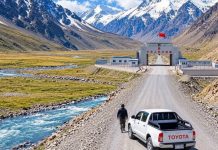
Local sources said strict security measures had been imposed across several cities and along major highways in Balochistan in recent days, with Pakistani forces deployed at different locations. Trenches had reportedly been dug across roads in some areas, while markets and other commercial centres had been closed.
Residents said restrictions imposed in the name of security were disrupting daily life and commercial activity. They also alleged that state institutions were closing entire cities and roads “merely to display a Pakistani flag”, adding to the difficulties faced by the public.