













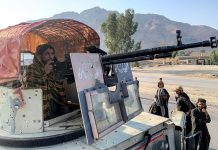
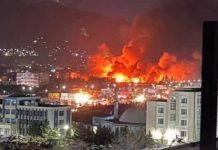




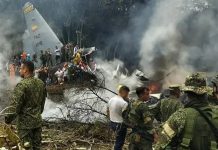
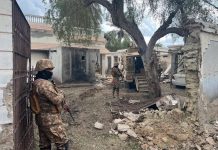





A new report by Reuters has highlighted the growing participation of women in suicide attacks carried out by the Baloch Liberation Army (BLA), alongside what officials describe as the group’s access to increasingly sophisticated weaponry.
Wearing military fatigues with rifles slung over their shoulders, Yasma Baloch and her husband Waseem smile into the camera for a photograph released by insurgents after their final mission: detonating suicide bombs, the report noted.
“They shared a marriage before they shared a final stand,” the BLA said in a statement accompanying the image, which was circulated on social media.
Reuters reported that the photograph was among several pictures and short biographies released by the group that it was unable to immediately verify.
Analysts, however, viewed the material as part of an effort by insurgents in resource-rich but impoverished Balochistan to highlight the reach and appeal of their movement.
According to the report, armed attacks in Balochistan reached a record level last year, fanning risks to major investments planned in the region, including Chinese and U.S. interests.
Growing Female Participation
Pakistani officials told Reuters that the participation of women in suicide attacks represented a “new and dangerous trend,” warning that it could expand the organisation’s influence within communities directly affected by conflict.
“It gives them popularity and reach,” Junior Interior Minister Talal Chaudhry said, adding that it signals to local populations that “the fight has entered their homes.”
The report also cited senior government official Hamza Shafaat, who said at least six women, including three suicide bombers, took part in the BLA’s largest wave of coordinated attacks in January, which brought several districts of Balochistan to a standstill.
Pakistan’s Counter Terrorism Department (CTD), in a report seen by Reuters, noted that the women involved came from varied socio-economic backgrounds, including some with university education.
“The shift represents a dangerous evolution in terrorist tactics,” the CTD report said, referring to women’s growing participation.
While authorities know of only a small number of women who have joined the ranks of the BLA, analysts say the recruitments point to the group’s widening appeal among ethnic Baloch residents.
Pearl Pandya, a South Asia analyst at conflict-monitoring organisation ACLED, said the BLA’s appeal “has now gone beyond male-dominated tribal structures to include a wider cross-section of society.”
‘Most Organised and Lethal Group’
The Reuters report further noted claims by Pakistani security officials that the BLA has strengthened its capabilities by accessing advanced weapons left behind in Afghanistan following the withdrawal of U.S. forces in 2021.
Pakistan’s military says it has recovered hundreds of American-made rifles, night-vision devices and other equipment in recent operations, although Reuters said it could not independently verify whether the weapons used by the BLA originated from U.S. stockpiles.
Abdul Basit, a researcher specialising in militancy at Nanyang Technological University in Singapore, described the BLA as “the most organised and lethal insurgent group in South Asia.”
He cited the group’s use of drones to identify troop deployments and vulnerabilities, adding that it used satellite communication during a February 2025 hijack of a train with more than 400 passengers aboard.