





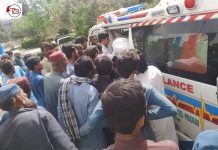
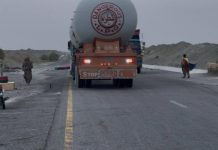


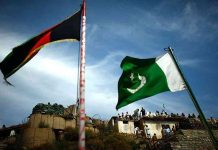
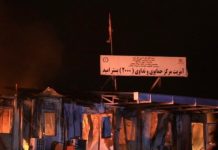





The events that unfolded across Balochistan on 31 January 2026 may prove to be a strategic turning point in the region’s armed resistance movement, which has unfolded over more than two decades and is regarded as the fifth major phase of insurgency.
The simultaneous, wide-ranging and coordinated attacks carried out on this date not only disrupted state control across large areas but also signalled that the intensity and geographical scope of the resistance may expand further in the coming days.
Geographical Scale of the Attacks and BLA’s Operational Capacity
The Baloch Liberation Army (BLA), considered the largest and most organised armed group within the Baloch resistance, carried out operations simultaneously in at least twelve cities across Balochistan.
According to available information, the districts targeted by BLA fighters collectively span approximately 102,500 square kilometres, amounting to nearly 30 per cent of Balochistan’s total land area.
The areas affected included major urban and strategic locations such as Quetta, the capital; Noshki; Kech; Gwadar, a central hub of the China-Pakistan Economic Corridor (CPEC); Kachhi; Kalat; Dalbandin, home to major mining projects including Saindak; and several other strategic and urban centres.
In the early hours of 31 January, reportedly thousands of armed fighters, locally referred to as “sarmachars”, entered both urban and rural areas simultaneously. Military camps, police stations and government installations were seized, weapons were taken, and several offices and police stations were set on fire.
For several hours, state control across large parts of Balochistan was effectively suspended. Quetta Cantonment was reported to be the only area that remained fully secured and was swiftly sealed off.
Advance Towards Strategic Targets in Quetta
In Quetta, the largest urban centre in Balochistan, the BLA carried out a vehicle-borne improvised explosive device (VBIED) attack targeting a highly sensitive zone housing government offices, parliamentary buildings and the Balochistan High Court.
According to the group’s claims, more than thirty police personnel, including a station house officer and a deputy superintendent of police, were killed, while several others were injured. Video footage released by the BLA showed police stations and official records being set ablaze, along with scenes of detainees being released.
This development is viewed as a notable shift in operational strategy, indicating that the group is no longer limiting its activities to remote areas but is attempting to demonstrate reach near key centres of state authority.
Noshki, Gwadar and Other Strategic Locations
Approximately 150 kilometres from Quetta, the city of Noshki remained under the control of BLA fighters for a fourth consecutive day, with intense clashes reported.
Following the takeover of the city, armed fighters reportedly attacked several Pakistani military camps and a facility associated with the intelligence agency ISI. The highest number of casualties was reported from Noshki.
Administrative affairs in the city were also reportedly overseen by BLA fighters during this period. The Commissioner and Deputy Commissioner were taken into custody and later released.
Another key focus of the attacks was Gwadar, where a China-backed port project valued at approximately $60 billion is under development. Reports from the area stated that Baloch fighters targeted Gwadar Port, military installations and Chinese-linked projects.
A further strategically significant attack was reported from Chagai, where major mining projects such as Saindak and Reko Diq are located, involving both local and international companies, including Canada-based Barrick Gold.
In Tump, two suicide attacks targeted military camps, while a naval camp in Turbat was also attacked.
A separate high-intensity attack was reported in the coastal town of Pasni, where a Pakistani military headquarters was targeted.
In Ornach, nine personnel of Pakistani forces were reportedly taken into custody by BLA fighters, while additional attacks resulted in further losses.
In Wadh (Khuzdar), a remote-controlled explosive attack reportedly killed several personnel, including a Pakistani army captain. Attacks were also reported in Sibi, Sohbatpur and Nasirabad, targeting security forces and transmission lines.
Operation Herof (Phase II): Continuation of BLA Strategy
The BLA has described the recent wave of attacks as part of Operation Herof (Phase II). The first phase of the operation was launched in August 2024, during which dozens of cities across Balochistan were targeted, resulting in multiple casualties.
According to the group, Operation Herof represents a framework aimed at restoring Baloch control over Baloch areas.
Casualties, Clashes and Ground Situation
Over the past three days, reports have emerged of dozens of fatalities, including members of Pakistani military and police forces, pro-state armed groups and civilians.
The BLA has confirmed the deaths of 27 of its fighters, including members of its suicide unit, the Majeed Brigade. The group has so far released details of eleven fighters and stated that further information will be published gradually.
In its latest statement, the BLA said that Operation Herof Phase II continued into its fourth day and claimed that its fighters retained control over multiple locations for more than 58 hours. The group further asserted that, based on preliminary estimates, total casualties among Pakistani military, police, CTD personnel and affiliated armed militias had exceeded 220.
Participation of Women and Elderly Fighters
A notable development in the recent attacks has been the direct participation of women and elderly fighters in ground operations, marking a visible shift in the social and operational profile of the armed movement.
Following the 2022 suicide attack carried out by Shari Baloch, the BLA began incorporating women on a limited scale. However, this campaign marks the first reported instance of young women, an elderly woman (60) and a 70-year-old male fighter participating directly in guerrilla operations and suicide attacks.
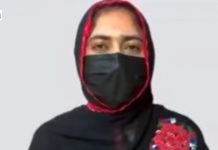
According to the BLA, one of the fighters who entered a military camp in Gwadar during clashes was Hawa alias Drosham, a female fighter whose footage has circulated widely. The group stated that she was a writer by profession and that her father, also a member of the BLA, was killed in earlier clashes.
Women were also reported to have taken part in fighting and urban operations in Quetta, Noshki and other locations, with the group stating that further details would be released.
The BLA further claimed that two female fighters, Asifa Mengal (23) and Hatam Naz alias Gul Bibi (60), carried out suicide attacks in Noshki targeting military camps and an ISI headquarters. Both were identified as members of the Majeed Brigade.
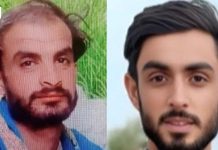
Among the eleven fighters whose profiles were released, another notable inclusion was a 70-year-old male suicide attacker, identified as Fazal Baloch alias Nako Miraan, marking a rare instance of an elderly individual participating in such operations.
The BLA also released details of a married couple who were members of the Majeed Brigade and took part in the Pasni attack. According to information published on the group’s media channel Hakkal, Yasma Baloch alias Zarina and Waseem Baloch alias Zarbar were husband and wife.
Yasma Baloch was born on 14 February 1997 in Alandur, Buleda, and joined the Majeed Brigade in 2022.
Waseem Baloch was born on 27 April 1992 in Kaladar, Zamuran, joined the movement in 2014 and became part of the Majeed Brigade in 2022.
The group stated that the couple lived and fought together and were killed during the attack on a military camp in Pasni.
These cases indicate that the BLA is increasingly drawing on broader social layers within its organisational and ideological base.
According to the group, 14 members of its suicide unit, the Majeed Brigade, have so far carried out attacks during the current campaign. The BLA has also released details of several other young fighters, via its official media channel Hakkal.
Conclusion: Indications of a Shift
The coordinated attacks of 31 January, the breadth of operations across a wide geographical area, the participation of women and elderly fighters, and sustained pressure on state structures suggest that the armed conflict in Balochistan is entering a new phase.
Analysts note that this phase appears more organised, geographically expansive and socially diverse, with the potential to significantly shape the political and security landscape of Balochistan in the period ahead.
Several Pakistani and international observers have also warned that continued escalation could pose risks to foreign investment in Balochistan, including Chinese-backed projects and wider international economic interests.