


















Pakistan Army’s Field Marshal Asim Munir, the Chief of Defence Forces, and the Chief of Army Staff visited Quetta on Wednesday to review the ongoing security situation in Balochistan and assess internal security operations against armed groups, officials said.
During the visit, military and law enforcement officials provided Field Marshal Munir with a detailed operational briefing, highlighting recent coordinated attacks by the Baloch Liberation Army and the response of security forces. Officials said the briefing covered efforts to strengthen state writ, ensure civilian protection, and secure key installations across Balochistan.
Field Marshal Munir emphasized that no “militant” or their supporter would be spared and that strict legal action would be taken against anyone involved in acts of violence against the Pakistani forces. He underscored that alleged attacks on civilians could not be justified under any circumstances.
Military sources said that the army chief lauded the professionalism, courage, and sacrifices of personnel from the Pakistan Army, Frontier Corps Balochistan, and police, who have been engaged in operations to counter “anti-state elements” while “maintaining law and order.”
Following the operational review, Field Marshal Munir, accompanied by Balochistan Chief Minister Sarfraz Bugti, visited the Combined Military Hospital (CMH) Quetta. There, he met with wounded personnel from the army, Frontier Corps, and police, reportedly praising their “resilience and dedication to defending the nation.”
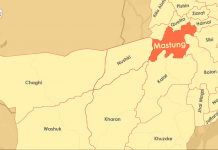
The visit comes amid the ongoing “Operation Herof” launched by the Baloch Liberation Army, which began last week with simultaneous attacks across twelve districts, including Quetta, Noshki, Dalbandin, Kharan, Mastung, Kalat, Gwadar, Pasni, Turbat, Tump, and Sibi. Reports indicate that fighting continues in Noshki, where security forces and BLA fighters remain engaged in clashes.
Officials and local residents reported that heavy firing and drone strikes by security forces in Noshki, Gwadar, and Kech have so far resulted in the deaths of nearly 24 civilians, with multiple others injured. Communication systems across Balochistan remain suspended, limiting access to real-time information from affected areas.