














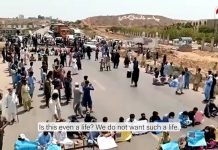





Former United States Special Representative for Afghanistan, Zalmay Khalilzad, has said that Pakistan’s strategy in Balochistan appears to be failing, citing the scale and coordination of recent attacks carried out under the Baloch “pro-independence” group Baloch Liberation Army’s “Operation Herof.”
In remarks shared publicly, Mr. Khalilzad said the developments reflected a deeper crisis in Pakistan’s approach to Balochistan, arguing that the existing strategy required reassessment and change. His comments came a day after the Baloch Liberation Army announced the launch of the second phase of “Operation Herof,” under which a series of coordinated attacks were reported across multiple areas.
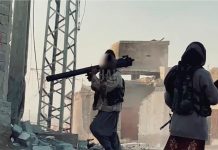
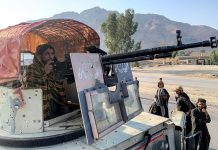
According to reports attributed to the group, attacks were carried out in Quetta, Nushki, Dalbandin, Kharan and Gwadar, while incidents of varying intensity were also reported from Mastung, Kalat, Tump, Turbat, Sibi and Naseerabad. The group claimed that it had gained control over several locations during the course of the operation, assertions that could not be independently verified.
In response to the unfolding situation, authorities imposed emergency measures across Balochistan, including the suspension of internet services in all major cities. Officials have so far confirmed the deaths of at least 15 security personnel, though unofficial sources suggest the death toll may be over a hundred due to the sheer scale of the attacks.
In a brief statement issued late at night, Baloch Liberation Army spokesperson Jeeyand Baloch said that the second phase of “Operation Herof” was continuing more than 15 hours after its launch. He claimed that fighters remained in control of several areas and that security forces were under what he described as sustained pressure. The spokesperson further alleged that government forces had suffered significant casualties and material losses during the ongoing operations, adding that detailed information would be released later.
While the Pakistani state has not publicly responded to Khalilzad’s remarks, analysts say the former U.S. envoy’s comments reflect a growing international focus on the persistence of conflict in Balochistan. Some security observers argue that the recurrence of large-scale, coordinated attacks raises questions about the effectiveness of existing security-centric policies, while others stress the need for political engagement alongside enforcement measures.