









Chief Minister Balochistan Mir Sarfaraz Bugti has said that the situation in Balochistan is not a political issue and can only be resolved through military means, remarks that have drawn renewed attention to his long-standing hardline stance on the conflict.
Speaking in an interview with a private Pakistani television channel, Bugti said that prior to 2018 the state did not pursue a policy of reconciliation, and claimed that “militant violence” increased due to what he described as conciliatory approaches. He said that “during a war, every segment of society must stand with the state.”
The chief minister described the National Action Plan as the most important document after the Constitution of Pakistan, stating that it had been agreed upon by both political and military leadership. He claimed that armed groups do not enjoy more than two to three percent public support and alleged that fighters use civilians as human shields during attacks in urban areas.
Bugti further claimed that thousands of fighters had been killed in intelligence-based operations over the past year, and said the number of armed groups and their facilitators in Balochistan did not exceed “four to five thousand.” Referring to recent violence, he said authorities had prior intelligence about attacks in Panjgur and Shaban, adding that 31 civilians and 17 security personnel were killed in those incidents. He said combing operations were still under way in Nushki.
The chief minister also urged international media outlets to label armed groups as “terrorists,” and accused Afghanistan’s Taliban government of failing to uphold assurances that its territory would not be used against Pakistan, claiming Afghan soil was being used for attacks. Analysts argued that Bugti’s claim of Afghanistan’s being used for coorindating attacks in Balochistan, a claim echoed by Pakistan’s security establishment, was shattered two days ago when the BLA chief Bashir Zeb Baloch personally led the groups coordinated attacks across Balochistan under “Operation Herof.” The security establishment has often claimed that Bashir Zeb and the core leadership of the BLA has been operating from Afghanistan, but the BLA chief being at the frontline of the new wave of attacks has shattered these claims
Observers also note that Bugti has expressed similar “genocidal” views both before assuming office and after becoming chief minister. Political analysts and human rights commentators have previously pointed out that he has repeatedly framed the conflict in exclusively military terms. Some critics recall past remarks attributed to Bugti in which he suggested that extreme force, including rhetoric interpreted by rights groups as advocating collective destruction and genocide, was the only way to address resistance in Balochistan. Analysts argue that such statements have reinforced perceptions of an uncompromising state approach and deepened mistrust among affected communities.
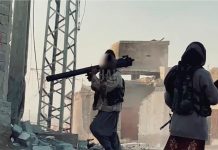
The remarks come amid continuing violence following the announcement by the Baloch Liberation Army (BLA) that it had launched second phase of its “Operation Herof” across Balochistan. Since the announcement, reports of attacks and clashes have emerged from multiple areas.
BLA spokesperson Jeeyand Baloch said the operation had continued at full intensity for more than 35 hours. According to his statement, the group maintained control in Nushki, Quetta, and other locations, and had seized several government installations, security camps, and checkpoints. He claimed that what he described as the “military and administrative presence of enemy forces” had been pushed back in various areas, placing security forces under severe pressure.
Government authorities have not confirmed these claims, and official statements have presented a markedly different account of the situation. Independent verification remains difficult due to ongoing security restrictions and disruptions to communications across much of Balochistan.