



















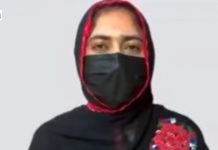







The enforced disappearances of Baloch women represent a serious and dangerous escalation in state violence, indicating that enforced disappearance is now being used as an organized and gendered strategy, detained Baloch Yakjehti Committee (BYC) central organizer Dr. Mahrang Baloch said in a statement.
Dr. Baloch said that for decades the Baloch people have been treated as a suspect and marginalized population, where governance has relied on coercion, fear, and force rather than inclusion and constitutional rights. She stated that enforced disappearance, previously largely directed at Baloch men, has now expanded to include women and girls.
According to Dr. Baloch, those affected include students, underage girls, pregnant women, and persons with disabilities, many of whom have no connection to any political activity. She said this development demonstrates that enforced disappearance is no longer framed even narrowly as a security-related practice but has taken on broader social and political dimensions.
Dr. Baloch described the targeting of women as part of a wider pattern of what she termed colonial-style governance and “necropolitical power”, in which the state determines whose lives are protected and whose are erased socially and legally. In this context, she said, Baloch identity itself has effectively been criminalized, and the enforced disappearance of women has assumed the form of collective punishment.
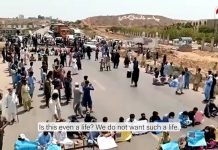
She added that when Baloch women began searching for their missing relatives, organizing protests, and questioning courts and state institutions, official narratives were exposed. As a result, she said, women are now being directly targeted in an effort to weaken the social foundations of resistance.
Dr. Baloch stated that repression and identity-based violence do not produce silence or submission, but instead deepen political awareness, collective solidarity, and resistance. She said the enforced disappearances of Baloch women should not be viewed as security measures but as a systematic practice aimed at controlling society through fear.
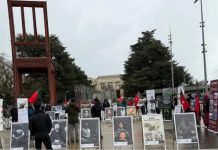
She further said that efforts to document and publicize these cases form part of the collective memory of the Baloch people, preventing enforced disappearances from being reduced to statistics and keeping demands for visibility, truth, and justice alive.