








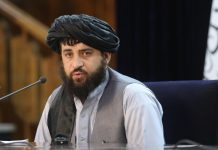






The Baloch Yakjehti Committee (BYC) has accused Pakistan’s military media wing of attempting to legitimize enforced disappearances and extrajudicial killings, calling the latest ISPR press conference a “systematic effort” to justify state repression in Balochistan.
In a statement, the BYC said the Director General of ISPR’s remarks “once again confirmed” that state policies in Balochistan remain unchanged, and that state institutions continue to use “various terminologies and narratives” to rationalize grave human rights violations.
The group said political and human rights organizations were singled out during the press briefing, including activists who have continued to speak against disappearances “despite arrests, FIRs, threats and continuous state violence”.
The BYC said no new information was offered and that the press conference relied on “an old, worn-out scripted narrative” intended to divert attention from documented abuses.
The BYC spokesperson said ongoing allegations against the BYC and its leader, Dr Mahrang Baloch, were part of a broader campaign that has intensified in recent months. The group said “identical, baseless and false allegations” had been repeated several times, yet the DG ISPR “has failed to prove even a single accusation.”
The BYC also criticized the media’s role during the press conference, saying journalists present “did not raise critical questions” and that “journalism itself appeared paralyzed”. The group claimed reporters, “sitting under the shadow of guns”, seemed unable to ask logical or probing questions.
The statement said the same approach was visible in a recent press conference by the Balochistan Chief Secretary in Quetta, where the ISPR narrative was “adopted verbatim”. It said enforced disappearances were justified without evidence, and that missing persons were labelled as terrorists without judicial process.
“If a person is truly a terrorist, why are they not arrested through legal means and presented before courts?” the spokesperson asked. “Why are their mutilated bodies recovered after years of enforced disappearance? If evidence exists, why is it not presented before a court of law?”
The BYC said enforced disappearances continue “on a daily basis” in Balochistan, claiming more than 2,000 people have been disappeared this year alone. The group said “hardly a household” remains unaffected.
It said lawyers, civil society groups and human rights organizations have consistently maintained that enforced disappearance is illegal under Pakistan’s Constitution and international law. The group said the media trials of victims and activists serve to “instil fear, expand repression and paralyze Baloch society”.
“As a political organization, we will continue to raise our voice against every aspect of Baloch genocide, including enforced disappearances,” the statement said.
It added that the BYC would continue to highlight every case until individuals are presented before courts, saying no authority has the right to label anyone a criminal “at gunpoint”.
The group concluded that such press conferences would not deter it from its work and that its struggle against enforced disappearances would continue in a “more organized, stronger and more effective” manner.