














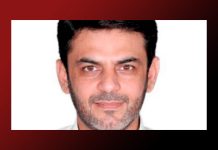





Veteran Baloch rights activist Mama Qadeer Baloch passed away on Saturday in a private hospital in Quetta after a prolonged illness.
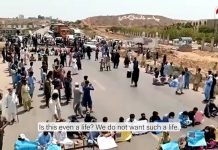
He served as the vice chairman of the Voice for Baloch Missing Persons (VBMP), which set up a protest camp in Quetta in 2009, one that became one of South Asia’s longest continuous human rights demonstrations against enforced disappearances.
Under Mama Qadeer’s leadership, the camp operated daily outside the Quetta Press Club, where he maintained a hunger strike from 10:00am to 6:00pm each day as a form of protest.
VBMP Chairman Nasrullah Baloch confirmed his passing, saying: “He had been ill for a long time and was undergoing treatment at a private hospital in Quetta for the past two months.” He added that funeral prayers and burial would be held on Sunday in Mama Qadeer’s native Surab district.
In November 2011, Mama Qadeer received the mutilated body of his son, Jalil Reki, who was the information secretary of the Baloch Republican Party (BRP). The kidnapping and subsequent death of his son further galvanised the advocacy group, strengthening its efforts to support families enduring similar tragedies.
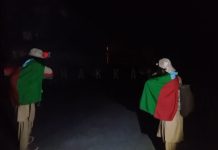
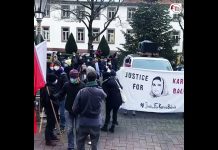
In 2013, Mama Qadeer led a long march on foot from Quetta to Islamabad, joined by Baloch men and women demanding accountability for enforced disappearances and the recovery of missing persons.
‘A Symbol of Resistance’
The Baloch National Movement (BNM) described his death as a “great loss” for the Baloch nation, calling Mama Qadeer “a remarkable human being who dedicated his entire life to the recovery of victims of enforced disappearances.”
In a statement, the organization said: “Despite the immense personal tragedy of losing his son, Shaheed Jalil Reki, Mama Qadeer never withdrew from the movement. Instead, he emerged as one of its strongest and most unwavering voices.”
BNM noted that Mama Qadeer protested “for 16 consecutive years without interruption,” often facing threats, ill health and security risks. “For thousands of families, he was a beacon of hope,” the group said, adding that the true way to honour him was to “continue his mission.”
The Baloch Women Forum (BWF) also paid tribute, calling him “a symbol of national resistance” whose lifelong struggle inspired generations. The group described him as “a living example of continuous struggle,” noting that his efforts had drawn global attention to human rights violations in Balochistan.
In a post on X, the Human Rights Commission of Pakistan (HRCP) said it expressed “deep sorrow at the passing of human rights defender Mama Abdul Qadeer,” recalling his role in establishing the VBMP and leading the 2013 long march from Quetta to Islamabad.
“His legacy will endure in the countless families he stood beside,” HRCP said, urging the state to take “concerted action” to restore the rights for which he campaigned.
Balochistan National Party President Sardar Akhtar Mengal also expressed grief, saying he was “extremely saddened at the passing of Mama Qadeer,” whom he described as “a symbol of resistance against state oppression, enforced disappearances and injustice.”
Mengal said that despite immense personal loss and hardship, Mama Qadeer “never abandoned the families of the disappeared or his demand for truth and accountability.” His struggle, he said, “embodied the collective pain and political resistance of an entire people.”
Human rights advocate Imaan Zainab Mazari-Hazir called the news “heartbreaking,” describing it as a “huge loss” to the region’s human rights movement. “Mama Qadeer will forever remain etched in our hearts and minds,” she wrote.
Norway-based journalist Kiyya Baloch said Mama Qadeer left behind a legacy of “more than 16 years of non-violent struggle that continues to inspire today’s peaceful resistance against enforced disappearances.”
“He sat for endless days in front of the Quetta and Karachi Press Clubs and marched for countless miles, all in the service of his people,” said academic Nida Kirmani, a professor at the Lahore University of Management Sciences. “May Mama Qadeer’s struggle to end the cruel practice of enforced disappearances someday be successful.”
“He will always be remembered for his struggle against enforced disappearances, for demanding justice for the Baloch and for standing bravely in the face of oppression,” National Democratic Movement Chairman Mohsin Dawar said in a post on X.