









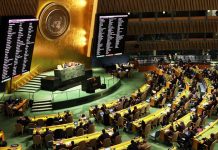




Pakistan told the United Nations Security Council (UNSC) on Wednesday that it may take “all necessary measures” in self-defense if cross-border attacks originating from Afghanistan are not halted.
Pakistan’s Permanent Representative to the United Nations, Ambassador Asim Iftikhar Ahmad, made the remarks while addressing a UNSC debate in New York on the situation in Afghanistan.
Briefing the Council on Pakistan’s counterterrorism concerns since the Taliban takeover in 2021, the ambassador said Islamabad had maintained consistent engagement with the Afghan authorities, including high-level visits, humanitarian support, transportation facilitation and trade and transit concessions.
He said the international community had been assured that Afghanistan would not again be allowed to become a “safe haven for terrorists,” but that this assurance “has not materialised.” The situation, he added, posed a threat “to the entire world and to Pakistan.”
“Afghanistan is once again a safe sanctuary for terrorist groups and proxies,” he said, adding that this had resulted in “devastating consequences and mounting security challenges for its immediate neighbours, particularly Pakistan.”
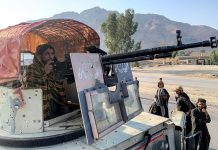
Ahmad said Pakistan had seen a surge in attacks “planned, financed and orchestrated using Afghan soil under their watch” and accused Afghan authorities of failing to take concrete action against militant groups.
According to Ahmad, 1,200 Pakistanis have been killed this year in militant attacks allegedly originating from Afghanistan. He said Pakistani authorities had intercepted 214 attackers, including suicide bombers, entering from Afghanistan since 2022.
He alleged that the Tehreek-e-Taliban Pakistan (TTP), Baloch Liberation Army (BLA), the BLA’s Majeed Brigade and other groups enjoyed “safe haven” inside Afghanistan and claimed that “elements within the Taliban rank” were supporting them.
He warned that if the Taliban authorities “do not stop attacks on Pakistan from Afghan soil,” Islamabad would take “all necessary defensive measures” to protect its citizens and sovereignty.
India Accuses Pakistan of ‘Trade and Transit Terrorism’
India delivered a sharp response during the session, accusing Pakistan of suffocating Afghanistan through what it described as “trade and transit terrorism,” including border closures, economic pressure and actions that have harmed civilians.
India’s representative said Pakistan’s restrictions violated World Trade Organization rules and amounted to “open threats and acts of war” against a landlocked country already struggling to stabilize.
The Indian envoy also criticised Pakistan for carrying out airstrikes inside Afghanistan, calling them a violation of the UN Charter and international law. The attacks, he said, had “serious humanitarian implications,” and he urged all parties to prioritise the protection of civilians.
“We add our voice to calls for paying full respect to the United Nations Charter and international law, with particular attention to the protection of innocent civilians,” the envoy said.
Reaffirming its position, India said it remained fully supportive of Afghanistan’s sovereignty, territorial integrity and independence. It said the international community should adopt a pragmatic approach in dealing with the Taliban and encourage constructive behaviour rather than relying solely on punitive measures.