





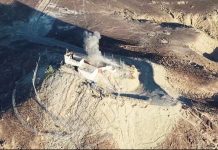
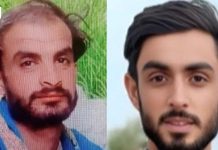
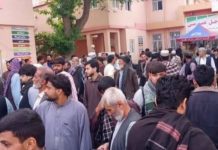


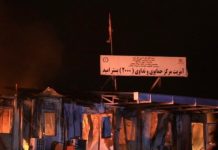

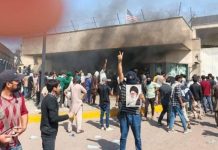


The Balochistan Liberation Front (BLF) on Thursday claimed that its fighters killed 76 Pakistani military personnel and several foreign employees during the attack on the Frontier Corps’ brigade headquarters in Nokundi, in Balochistan’s Chagai district. The group said six of its fighters were killed in the operation.
In a media statement, BLF spokesperson Major Gwahram Baloch said members of the group’s Saddo Operational Battalion (SOB) stormed the compound at 8:19 p.m. on 30 November, entering an area it described as housing offices and residential quarters for foreign staff linked to the Saindak and Reko Diq mining projects.
The BLF claimed that its fighters took several foreign employees hostage after breaching the facility.
According to the statement, Pakistani forces deployed SSG commandos, drones, helicopters and heavy weapons in repeated attempts to repel the attackers. The BLF said its fighters “repelled every attempt.”
The group said it had offered “an opportunity to negotiate,” but alleged that 18 hours after the offer, the Pakistani army “chose to use force” by directly targeting the compound with artillery and aerial strikes. The BLF said the confrontation ended with the deaths of six SOB fighters. It claimed that “76 military personnel, including foreign hostages,” were killed during the operation.
Meanwhile, Pakistani authorities said troops completed a clearance operation two days after the attackers stormed the Frontier Corps fort in Nokundi. “All six militants who attacked the FC fort have been killed by the security forces in the clearance operation,” officials said.
Authorities said the attackers entered the compound on Sunday night after “a suicide bomber detonated herself at the main gate.” Security officials added that three armed men were killed immediately, while three others managed to enter the building and take hostages before being killed by armed forces.
However, until late Thursday, the military’s media wing, the Inter-Services Public Relations (ISPR), had issued no statement regarding the attack, including no information on casualties, and had not publicly responded to the BLF’s claims.
BLF Calls Balochistan an ‘Occupied Region,’ Urges International Support
In a political statement accompanying its operational claim, the Balochistan Liberation Front (BLF) described Balochistan as “an occupied region” and said the Baloch nation was “struggling for freedom from forced occupation.” The group urged the international community to “support and respect the Baloch national liberation movement.”
The BLF alleged that the Baloch people were facing “severe genocide and colonial exploitation” under Pakistani rule. Citing the UN Charter, international law and the Universal Declaration of Human Rights, it said the Baloch nation “deserves the support of international institutions to restore its independence.”
The group called for global accountability mechanisms to investigate what it described as Pakistan’s “enforced disappearances, extrajudicial killings, political and human rights violations, and war crimes in Balochistan.”
Pakistani authorities deny these allegations.
Group Rejects Reko Diq, Saindak and CPEC as ‘Colonial Exploitation’
The BLF said the Reko Diq and Saindak copper-and-gold projects, together with infrastructure schemes such as the China–Pakistan Economic Corridor (CPEC), were “colonial projects” designed to “plunder Baloch national resources.” It argued that such initiatives entrench Pakistan’s control over the region and that presenting them as development for Balochistan was “a blatant lie.”
The group claimed Pakistan had “usurped” Balochistan’s land, minerals, coastline and natural wealth, accusing the state of violating international laws by auctioning these resources to foreign companies without the consent of the Baloch people.
The BLF said only an independent Balochistan had the authority to enter agreements with foreign companies. It argued that Pakistan and its “local collaborators” had “no legal or moral right” to negotiate or benefit from Balochistan’s mineral or maritime resources.
According to the group, foreign companies partnering with Pakistan were “stepping in the middle of a political conflict.” It said it did not recognise any agreement made by Pakistan with international firms and asserted that “the Baloch nation is the only owner of Balochistan and its resources.”
Independence Demand Is a ‘Legal and Natural Right’
Responding to critics, the BLF said its demand for Balochistan’s independence was neither emotional nor extremist but a “conscious decision of the Baloch nation” and a “national, historical, legal and natural right.”
It said every Baloch had a “national responsibility” to contribute to the struggle, arguing that the right to sovereignty and independence was recognised under international law, including the UN Charter. The group said achieving this right was “the only path to peace, stability and development in the region.”
The BLF said it remained “determined and prepared to make any kind of sacrifice” for independence, claiming that its movement enjoyed the support of the Baloch population.