















Dozens of political and human-rights activists, including family members of victims of enforced disappearances, have been placed on Pakistan’s Fourth Schedule under the country’s Anti-Terrorism Act (ATA), sparking widespread condemnation from civil society and rights groups.
According to a new notification issued by the Balochistan Home Department, the list was compiled to “improve law and order” and “monitor suspicious activities.”
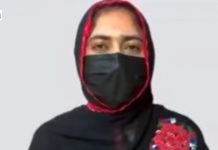
The new list includes Mahzaib Baloch, a human-rights activist and niece of forcibly disappeared political activist Rashid Hussain; Advocate Shahzaib Baloch, central organizer of the National Democratic Party (NDP); Comrade Imran Baloch of the Baloch Yakjehti Committee (BYC) Hub; and Arif Baloch of the Baloch Students Action Committee (BSAC), along with about 60 other activists and social figures.
What Is the Fourth Schedule?
The Fourth Schedule was introduced under Pakistan’s Anti-Terrorism Act of 1997 during the government of Nawaz Sharif to curb sectarian violence, militancy, and terrorism.
Individuals placed on the list are deemed “proscribed persons.” Restrictions imposed under the law include an embargo on passports, freezing of bank accounts, a ban on financial support and credit, suspension of arms licences, and employment restrictions.
Historically, the Fourth Schedule targeted hardcore militants and members of banned organizations. However, rights groups say its use in Balochistan has expanded in recent months to include political workers, students, and human-rights defenders, reflecting what they describe as a “troubling misuse” of anti-terrorism laws.
Political and Rights Groups Condemn ‘Authoritarian Move’
Human-rights organizations and political groups condemned the government’s decision, calling it “an assault on democratic freedoms” and “an attempt to criminalise peaceful activism.”
The Baloch Yakjehti Committee (BYC) said in a statement that placing political and social activists under the Anti-Terrorism Act represented “a deliberate effort to crush legitimate dissent.”
“This move is not only unlawful but also reflects a dangerous trend aimed at criminalising peaceful political activity,” the BYC said. “Hundreds of political and human-rights activists, including members of the Baloch Yakjehti Committee, have been added to the Fourth Schedule without due process, credible evidence, or fair judicial proceedings.”
The group said that 64 individuals from Hub, including students, human-rights defenders, and social organizers, were added to the list in a single day. It described the decision as a “violation of constitutional guarantees of freedom of expression, assembly, and movement.”
“The use of anti-terrorism laws as instruments of political pressure represents the worst form of state repression,” the BYC said, calling for the immediate removal of activists’ names and an end to the “misuse of the Fourth Schedule.”
The National Democratic Party (NDP) also rejected the move, describing it as “unconstitutional, undemocratic, and reflective of an authoritarian mindset.”
In a statement, the party said that including its central organizer Advocate Shahzaib Baloch alongside activists and unrelated criminal suspects was a deliberate attempt to discredit Baloch political movements.
“This act is, in fact, an admission that the political and democratic forces in Balochistan have grown stronger than state repression,” the NDP said. “Whenever public consciousness gains momentum, the government resorts to tools such as the Fourth Schedule to criminalise political thought.”
The NDP declared the notification “baseless, politically motivated, and an assault on the political consciousness of the Baloch people,” announcing that it completely rejects the decision.
The party said it would resist the move “through all political, democratic, and legal channels,” reaffirming its commitment to defending the democratic rights, political freedoms, and freedom of expression of the people of Balochistan.