







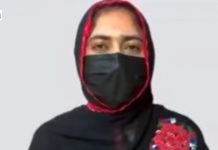

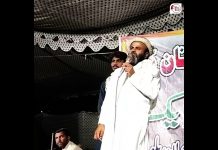



Baloch Yakjehti Committee (BYC) leader Dr Sabiha Baloch said on Wednesday that the misuse of anti-terrorism laws in Balochistan has intensified since the Pakistan Peoples Party (PPP) took power, with such laws now being used to suppress political dissent and human-rights activism.
In a statement posted on X, Dr Baloch said that “between September and October, more than a hundred people were added to the Fourth Schedule and placed on the Exit Control List (ECL) from across Balochistan.”
She said the Fourth Schedule, ECL and cyber-crime laws were “increasingly being used to target political dissent and peaceful human-rights activists,” adding that she herself had been placed on both lists and received a government summons.
Dr Baloch said that this month alone, she, Sammi Deen Baloch, Dr Shalee Baloch of the Baloch Women Forum (BWF), other BYC members and dozens of residents from Dera Bugti, Dalbandin, Kech, Khuzdar, Kharan, Kalat and Mangochar had been among hundreds newly placed on the Fourth Schedule.
The Baloch Yakjehti Committee (BYC) also issued a statement condemning what it called the “arbitrary and unlawful inclusion” of Baloch activists and human-rights defenders on the Fourth Schedule under Pakistan’s Anti-Terrorism Act 1997.
The group said the move represented “an alarming attempt to suppress peaceful activism, silence legitimate dissent, and criminalize those who advocate for human rights, justice and political rights.”
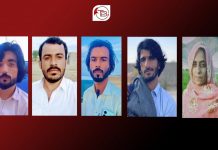
It said several of its members, including Dr Sabiha Baloch, Sammi Deen Baloch, Naz Gul, and Syed Bibi, along with Dr Shalee Baloch of the Baloch Women Forum (BWF), had been placed on the list “without due process or credible evidence.”
The statement called the move “a gross violation of constitutional protections,” warning that the misuse of counter-terrorism laws “undermines the rule of law and further erodes trust between the state and the people of Balochistan.”
Earlier on Tuesday, the Baloch Women Forum (BWF) also condemned the government notification that placed Dr Shalee Baloch, Naz Gul and Syed Bibi Sharif on the Fourth Schedule.
The forum described the move as “a direct attack on the rights to free expression, movement and peaceful activism,” while the Human Rights Commission of Pakistan (HRCP) called it “a deeply regressive step that labels political dissenters and human-rights defenders as security threats.”
In a separate post on X, Dr Shalee Baloch said the inclusion of her name on the list was “not a new tactic to try to suppress indigenous voices for human rights,” adding that such measures “will only strengthen us as political workers and encourage us to stand even firmer for the Baloch cause.”
Dr Sabiha Baloch said the misuse of counter-terrorism laws could have far-reaching implications. “If we raise concerns today about the misuse of anti-terror laws, some may not take them seriously,” she said. “However, this pattern will have broader consequences for the rest of Pakistan in the future.”