






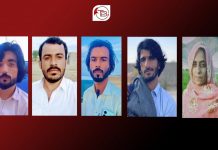




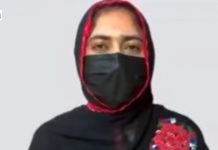

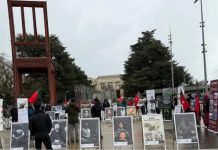
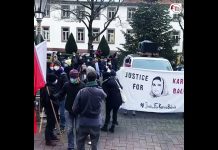



The Baloch Women Forum (BWF) on Tuesday condemned the Balochistan government’s decision to place its central organiser, Dr Shalee Baloch, along with Baloch Yakjehti Committee (BYC) activists Naz Gul and Syed Bibi Sharif, on Pakistan’s Fourth Schedule under Section 11-EE of the Anti-Terrorism Act (ATA) 1997.
A formal notification issued by the Home Department of Balochistan last Thursday confirmed their inclusion under Section 11-EE — a provision that allows authorities to restrict the movement of individuals “affiliated or concerned with activities related to terrorism.” The order remains in effect for three years unless withdrawn earlier.
According to the notification, the listed individuals are required to submit a bond of Rs 500,000 for good behaviour, surrender their passports, and obtain written permission before travelling outside their area of residence. They must also report monthly to their local police station or Levies Thana.
In a statement posted on X, the BWF described the move as “a direct attack on the rights to free expression, movement, and peaceful activism” and said it reflected the government’s continuing attempts to suppress political and social dissent in Balochistan.
According to the organisation’s central spokesperson, the decision to place the three activists on the Fourth Schedule was made “without due legal process” and represents “a serious violation of fundamental human rights.”
“The region has already been made unstable owing to the contemporary government’s excessive use of force and power against their opposition,” the statement said. “They have made the ground a battlefield of revenge where they consider no law and ethics, but are playing a negative role by working under the payroll of law-enforcement agencies as agents.”
The BWF added that it had always believed in “the right to free expression” and had “consistently raised its voice against all violations of the fundamental human rights of the indigenous people.” It said that “such acts are only a means to curb peaceful voices, which we have always condemned and will continue to denounce in every forum.”
In a separate post, Dr Shalee Baloch said the government’s action was “not a new tactic to suppress indigenous voices for human rights, but part of a long-standing attempt to diminish fundamental rights and silence resistance.”
“It is not the first time such an attempt has been made,” she wrote. “Previously there have been bogus FIRs and continuous threats from state institutions, including false criminal charges. This new Fourth Schedule is the continuation of the same harassment policy.”
Dr Baloch said such measures would “only strengthen us as political workers and encourage us to remain steadfast in the Baloch cause.” She added that she and her colleagues would “approach every legal forum to challenge the bogus charges.”
The Human Rights Commission of Pakistan (HRCP) also expressed “grave concern” over the decision, saying in a post on X that “labelling political dissenters or human rights defenders as security threats is a deeply regressive step that undermines fundamental freedoms of expression, association and movement.”
The BWF demanded that the government immediately withdraw the Fourth Schedule notification, warning that it would challenge the order “not only in legal forums but on political and social platforms as well.”