














Afghanistan has rejected a request for an official visit by a high-ranking Pakistani delegation led by Defence Minister Khawaja Muhammad Asif and the head of the Inter-Services Intelligence (ISI) Lieutenant General Asim Malik, according to a report published Monday by TOLOnews, citing sources within the Afghan government.
Reliable sources within the Islamic Emirate of Afghanistan confirmed to TOLOnews that over the past three days, the Pakistani delegation submitted separate visa requests to travel to Kabul for official talks. The requests were turned down by Afghan authorities.
Afghan government spokesperson Zabihullah Mujahid later said the decision was made in response to Pakistan’s recent airstrikes inside Afghanistan, which Kabul condemned as a breach of sovereignty.
“They had asked for their high-level delegation to come to Afghanistan,” Mujahid said. “But because of the airspace violations, the Emirate did not permit the trip and rejected their request.”
A senior Pakistani government source, however, denied that formal visa requests had been made, saying the idea of a visit was merely a “proposal,” not an official application.
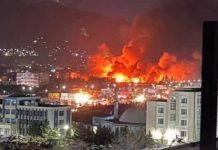
The development comes after Pakistan carried out airstrikes on Thursday night, which Islamabad said targeted militant hideouts in Afghanistan. Afghan authorities said the strikes violated their territory and airspace and targeted civilian areas.
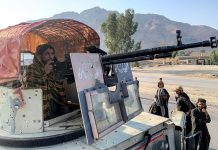
In response, Afghan forces launched retaliatory attacks along the Durand Line on Saturday, claiming to have killed 58 Pakistani soldiers, injured 30, and seized 25 military posts. Islamabad said its forces had given a “strong and effective response” to the attacks from the Afghan side.
The Pakistan Army on Sunday said at least 23 of its soldiers and more than 200 Taliban and affiliated militants were killed in intense overnight clashes along the border.
Political analysts in Kabul said the visa rejections reflected a shift in Afghanistan’s diplomatic approach toward Pakistan and an emphasis on mutual respect.
“Afghanistan’s national interests demand that our country maintain healthy and constructive relations with all its neighbours, especially Pakistan,” political analyst Mohammad Amin Karim told TOLOnews. “Unfortunately, ever since Pakistan’s artificial creation, this problem has remained a festering wound.”
Another analyst, Sayed Bilal Fatemi, said Islamabad’s delegation request “after having violated Afghan territory without any reason or evidence, against international law,” was “like salt in the wound of the Afghan people.”
The visa denial marks a new low in relations between Kabul and Islamabad, which have been increasingly strained by cross-border attacks, airspace violations, and mutual accusations of harbouring militants.