












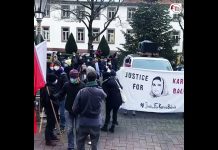




In Berlin, Baloch activists and their allies took part in a special session titled “An Evening on Balochistan, Speaking on Silence,” organized by Critical Pakistan. The gathering focused on the “state repression” faced by the Baloch people and the policies aimed at silencing dissenting voices.
The session opened with the screening of a documentary by Iranian filmmaker Shokoufeh Kamiz, based on the life and assassination of Karachi’s well-known social activist Sabeen Mahmud. Mahmud, founder of The Second Floor (T2F), was murdered in 2015 shortly after hosting an event titled “Unsilencing Balochistan.” The film remembered her courage and tragic death, underscoring how raising the Baloch narrative in Pakistan carries deadly risks.
After the screening, a panel discussion was held. Abdullah Abbas, Executive Director of the Human Rights Council of Balochistan, said Pakistan maintained a “colonial grip” over Balochistan, where people were subjected to systematic human rights violations. “In Balochistan, from enforced disappearances to extrajudicial killings, the machinery of state repression has turned everyday life into a struggle for survival,” he said.
Baloch activist and musician Farhad spoke about the contradictions within Pakistan’s progressive circles. He argued that many of these groups raise their voices against injustices in Palestine, India, or by the United States but remain silent when it comes to the oppression of the Baloch by the Pakistani state. “One-sided solidarity loses its meaning. If silence is maintained on domestic repression, then protest against foreign repression becomes nothing more than an empty slogan,” he said.
The session concluded with a cultural program, where Farhad and Balach Bali performed traditional Balochi music on the banjo. Their performance carried the message that despite decades of attempts to suppress it, Baloch culture not only remains alive but also continues to assert its resistant identity even in exile.