























Women’s rights organisations have expressed grave concern over the rising number of so-called “honour killings” in Balochistan, urging the provincial government and law enforcement agencies to take urgent and effective measures to protect women and girls.
In a joint statement, the Aurat Foundation and the EVAW Alliance — a coalition working against violence against women — condemned the recent cases, describing them as a violation of human dignity and a contradiction of the state’s claims of providing protection.
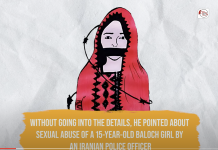
The organisations pointed to a series of incidents reported in Khuzdar, Bhag, Mastung, Usta Muhammad, Sariab, and Khrotabad, where women and girls were allegedly killed by family members in the name of honour. Reported cases included the killing of wives by their husbands, strangling of daughters, sexual abuse by fathers, and murders committed by close relatives.
Officials said two separate incidents of honour killings were reported in Balochistan within just 12 hours earlier this week, leaving four people dead. According to Levies authorities, one case occurred in Khuzdar’s Zehri tehsil, where a man shot dead his wife and another man. In the second incident in Bhag, district Bolan, a man reportedly killed his wife and another man before fleeing the scene. No arrests have been made so far.
On 21 August, a woman and a man were also killed in Khan Kot, Dera Murad Jamali, bringing the number of such incidents in August alone to four. Similar cases were reported in July from Mastung, Naseerabad, and Usta Muhammad. Earlier this year, in Dagari, a woman named Bano and a man named Ehsan were killed on camera in an incident that drew widespread outrage.
According to Aurat Foundation data, 212 cases of honour killings were documented in Balochistan between 2019 and 2024. The highest numbers were recorded in 2019 (52 cases) and 2020 (51 cases). The figures dropped to 24 in both 2021 and 2023, rose to 28 in 2022, and climbed again to 33 in 2024. Statistics for 2025 are yet to be compiled.
District Naseerabad recorded the highest number of cases over this six-year period, followed by Jaffarabad, Jhal Magsi, Mastung, Kachhi, Quetta, Kalat, Sohbatpur, Loralai, and Khuzdar.
The foundation cautioned that these figures reflect only reported cases, while many others go unrecorded due to local pressures, fear of stigma, and interventions by tribal and jirga systems.
The report also highlighted systemic barriers to justice, noting that in most cases perpetrators are neither arrested nor prosecuted. It cited slow judicial processes, lack of cooperation by police, and political and tribal pressures as major obstacles in securing accountability.
Rights groups warned that without decisive state action, women and girls in Balochistan would remain vulnerable to such crimes, and impunity would continue to embolden perpetrators.