
















Pakistani authorities in Balochistan’s Basima have imposed curfew-like restrictions and ordered residents to stay indoors after a large-scale attack in the area.
According to an official order, all movement has been banned from Green Chowk to Durog between 10:00 p.m. and 5:00 a.m. The administration warned that anyone found outside without prior permission would be held responsible for any loss of life or property.
The notice urged residents to cooperate with security forces, stating that strict action would be taken against violators. Citizens were advised to contact the police control room in case of emergencies or to obtain permission for movement.
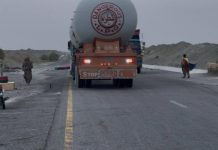
The restrictions follow a large-scale attack claimed by the Baloch Raaji Aajoi Sangar (BRAS), in which fighters targeted the Pakistani army’s main camp in Basima, ambushed a convoy at Basima Cross, and attacked multiple government buildings.
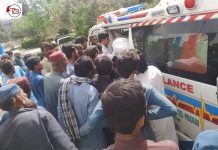
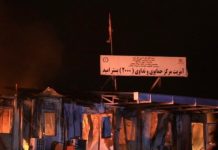
BRAS said 13 military personnel, including a captain, were killed and at least 11 others injured. The group also claimed its fighters destroyed military vehicles, seized weapons from the Levies station, and set fire to the Levies station, the NADRA office and the judicial complex. Fighters also blockaded the main highway and raided alleged hideouts of state-backed “death squad” operatives.
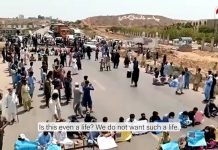
Since the attack, heavy contingents of security forces have been deployed in Basima, while markets remain closed and residents confined to their homes.
Meanwhile, similar restrictions have been reported in other parts of Balochistan. In Nasirabad, Kech district, the market has been closed for four days under curfew-like conditions, with residents saying security forces detained several shopkeepers who attempted to reopen their businesses. Locals say the prolonged closure has led to shortages of essential goods and forced people to remain indoors.
The All Parties Kech alliance condemned the measures, calling them an “anti-people” policy that punished ordinary citizens for no fault of their own. It urged the district administration to intervene immediately and restore daily life in the area.
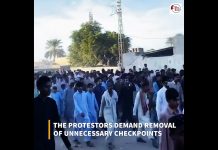
Earlier this week, residents in Gwadar said the city was sealed on the eve of 14 August, with all entry and exit routes blocked. Section 144 has also been enforced across much of Balochistan, while mobile internet services remain suspended in many districts.
Political parties and rights groups have criticised the sweeping restrictions, saying they have placed severe hardships on the civilian population.
The government has defended the measures as necessary to prevent possible attacks by Baloch armed groups during August, a period often marked by heightened armed activity.