




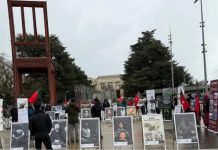
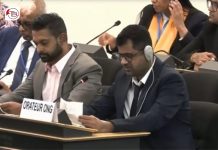
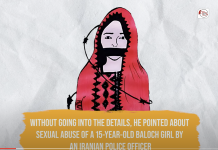
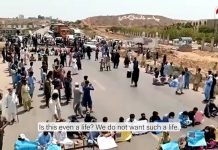
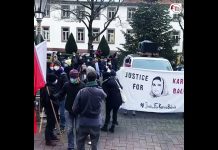


The Baloch National Movement (BNM) has accused Pakistan of committing “organized genocide” in Balochistan during an international conference in The Hague aimed at drawing global attention to alleged human rights abuses.
The event, titled “The Case of Balochistan: Self-Determination and International Silence,” was attended by human rights activists, journalists and political figures from several countries. Speakers criticized the United Nations, the European Union and other international bodies for “inaction in the face of large-scale atrocities.”
BNM chairman Dr Naseem Baloch told participants that thousands of Baloch citizens had been “forcibly disappeared,” many later found dead in remote areas, while entire villages had been “destroyed” in military operations. He said that despite “large-scale atrocities… the United Nations, the European Union and other international bodies remain mere spectators.”
“These atrocities… have taken the form of an organized genocide,” he said. “The Baloch nation is struggling for its survival, freedom and sovereignty… the world must hear their voice, stand in solidarity with them, and hold Pakistan accountable.”
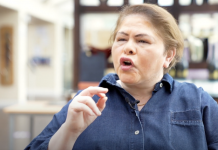
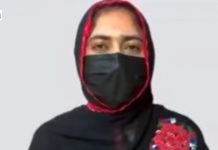
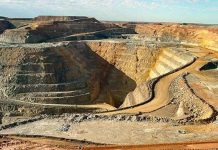
Pashtun Tahafuz Movement (PTM) activist Zali Wali condemned “state oppression and brutality” in both Balochistan and Khyber Pakhtunkhwa, alleging that “genocide is taking place on one hand” while on the other “the state is plundering our natural resources under an organized plan”.
She said villages in Waziristan were being emptied and young people “forcibly disappeared,” with the areas turned into military cantonments “to silence the voice of the people forever”. Wali stressed that the Baloch and Pashtun nations share “historical, geographical and cultural ties” and that PTM considers the Baloch struggle for freedom “part of its own struggle”.
BNM foreign secretary Faheem Baloch described the situation as a “humanitarian crisis” in which words “cannot fully convey the severity and gravity of the genocide”.
He said the region had been cut off from internet and communication networks “under a deliberate plan… to conceal the atrocities committed there” and to “erase our identity, language, culture and political existence”.
He called on the international community to “abandon double standards… and take effective and practical steps against state crimes”.
Human rights activist Charlotte Zehrer said Balochistan represented “an image of systematic oppression and brutality that can no longer be ignored”, adding: “Across the world there are countless claims about human rights, but… when it comes to Balochistan, the reality of those claims is exposed.”
Journalist Andy Vermaut told the conference that repression in Balochistan targeted “people from every walk of life”, with journalists facing harassment, false charges or even death for reporting on abuses. “In a region like Balochistan, the very idea of free journalism has itself become an act of resistance,” he said, adding that “oppression never lasts” and that the truth “ultimately prevails”.
Waheed Baloch, vice president of BNM’s Netherlands chapter, said Balochistan had once been independent but was “stripped” of its political freedom after Pakistan’s “forcible occupation”. He said the Baloch nation had “always rejected oppression and slavery” and vowed to continue resisting “until the freedom of Balochistan is achieved”.
Speaking in Dutch, BNM member Muhamad Muheem urged the Netherlands and the wider international community to take notice of “grave human rights violations, enforced disappearances and extrajudicial killings” in Balochistan.
He said global silence “deepens the wounds of the oppressed” and appealed to the Dutch government and people to “stand in solidarity with the Baloch nation” on the basis of universal principles of human rights, justice and freedom.