























The Baloch Yakjehti Committee (BYC), a rights group advocating for the civil, political, and socioeconomic rights of the people of Balochistan, has condemned the federal government’s recent decision to ban Shiite pilgrim caravans travelling through Balochistan en route to Iraq.
The group called the move a violation of constitutional and fundamental rights, and described it as an act of “religious discrimination” carried out under the pretext of “so-called security.”
In a statement released on Tuesday, the BYC said, “Freedom of religion is a fundamental right of every citizen. Any restriction imposed in the name of ‘so-called security’ is unacceptable.”
The group alleged that the state, citing “security concerns,” had imposed the ban instead of fulfilling its basic duty to ensure the safety of its citizens. “The responsibility of the state is to provide safe passage for citizens performing religious rituals, not to obstruct them on the basis of belief,” the BYC said.
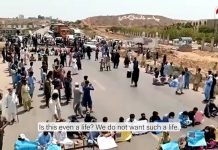
The BYC noted that Shiite pilgrims have announced a long march from Karachi to the Rimdan border in protest against the ban. The group described the march as a “constitutional and democratic right,” and declared its full support and solidarity with those participating in the protest.
“We demand that the ban on Shiite pilgrims’ caravans be lifted immediately, and that full security be provided to those travelling through Balochistan to Iran and Iraq,” the BYC said.
The statement further warned authorities not to attempt to obstruct the march through coercion or force, emphasizing that all religious minorities and sects must be allowed to practice their faith and perform rituals according to their beliefs.
The BYC stressed that it is the duty of the state to protect every citizen’s religious, political, and democratic rights, “not to curtail them under the pretext of so-called security concerns.”
It should be noted that Pakistan’s Federal Minister for Interior recently announced that Shiite pilgrims would be barred from travelling to Iraq via Balochistan, citing security threats to their safety. The federal government maintains that the measure was taken due to potential risks along the pilgrim route.
On the other hand, Shiite pilgrims and religious organizations have opposed the decision, stating that the state’s responsibility is to provide security, not to restrict religious rights or prevent citizens from performing rituals.