









Official budget documents for Balochistan’s fiscal years 2024–25 and 2025–26 have revealed a significant shift in the government’s spending priorities, with a sharp increase in allocations for official entertainment, promotional events, and propaganda campaigns – raising serious concerns about the government’s commitment to public welfare in one of South Asia’s most underdeveloped regions.
According to the documents, the Chief Minister’s Secretariat has increased its budget for gifts, luncheons, receptions, and recreational activities from PKR 405 million to PKR 1.183 billion – nearly a threefold rise. Meanwhile, funds allocated for conferences and workshops, ostensibly PKR 20 million, are reportedly being diverted to digital and on-ground propaganda initiatives aimed at bolstering the government’s public image.
Platforms such as “Buraq Digital” have become central to these propaganda campaigns. These initiatives largely exclude Baloch youth and are instead populated by individuals from other ethnic backgrounds, particularly targeting urban populations in Punjab. The overarching goal, insiders say, is to reframe criticism of enforced disappearances and human rights abuses in Balochistan as “enemy narratives,” while promoting a sanitized, state-friendly image of the region.
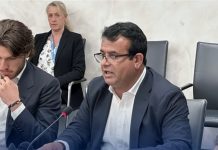
One such event, a three-day conference held from April 19–21, 2024, in Quetta, cost the government PKR 28 million. Hosted by Farah Azeem Shah, former government spokesperson and now a member of the Balochistan assembly, he event’s explicit purpose, according to official documents, was to counter growing criticism of the policy of enforced disappearances and present the state’s perspective as enjoying “public endorsement.”
The budget also shows a notable increase in expenses related to the Chief Minister’s travel and VIP logistics. Travel costs have jumped from PKR 21.5 million to PKR 27.7 million, while fuel and maintenance for government aircraft and helicopters have surged by 146%, now totaling PKR 84.1 million.
An internal team of over 40 digital operatives has reportedly been established within the Chief Minister’s Secretariat. Their task: manage fake social media accounts – many using Baloch-sounding names – to manufacture pro-government sentiment online. These accounts aim to give the impression that support for the government is homegrown and driven by the Baloch youth, even though most campaign faces are not local Baloch residents.
The notable individuals have been identified as the face of this digital propaganda campaign:
- Tania Bazai: Once a vocal advocate for Baloch rights and a lawyer for political detainees, Bazai has shifted towards staunch support of the Pakistani military establishment. Questions surround her academic credentials and reports link her to financial support from Chinese diplomats. She now labels former clients as “Indian agents.”
- Babar Khajak: A former Islamist and vocal critic of the military, Khajak is now a member of the Pakistan Peoples Party (PPP) Balochistan chapter. He has become one of the leading voices defending the state narrative and is actively involved in campaigns against Baloch nationalist and resistance figures.
The redirection of funds has come at the cost of social development. Critical sectors such as education, healthcare, employment, and human rights have been sidelined. Despite repeated calls for investment in infrastructure and basic services, the government has devoted increasing resources to image-building and narrative control.
Critics argue this approach reflects a broader pattern of governance that prioritizes state optics over democratic accountability. The emphasis on public relations and suppression of dissent over tangible service delivery has further alienated the Baloch population and deepened mistrust.
This report is adapted from an investigative thread on ‘X’ (formerly Twitter) by Norway-based Baloch journalist Kiyya Baloch, corroborated with official budget documents and credible sources within the Balochistan administration.