













At least five Pakistani security personnel have been killed and several others injured in two separate attacks in Balochistan’s Kech and Quetta districts.
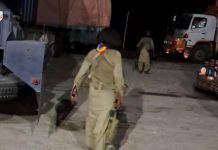
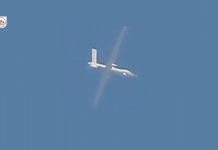
According to local sources, armed assailants ambushed a military convoy on Wednesday in the Kund Kapran area of Zamuran, in Kech district. Two military vehicles were struck, one of which was reportedly destroyed. Four soldiers were killed in the attack, and several others were injured. Military helicopters were later seen conducting aerial surveillance in the area.
In a media statement issued the same evening, the Baloch Liberation Army (BLA) claimed responsibility for the attack. The group said five army personnel had been “eliminated” and that several others were injured.
In a separate incident on Monday, the BLA said its fighters had targeted a police vehicle near Bakra Mandi on Quetta’s Eastern Bypass using a hand grenade. Station House Officer Noorullah and several other police personnel were reportedly injured in the attack.
BLA spokesperson Jeeyand Baloch said the group’s armed struggle would continue until the “complete withdrawal of Pakistani forces and the achievement of national liberation”.
No official statement had been issued by Pakistani authorities at the time of publication.
The attacks come amid a noticeable surge in armed activity across Balochistan. The Islamabad-based Pakistan Institute for Peace Studies (PIPS) and the Pakistan Centre for Conflict and Security Studies (PICSS) have both reported that Balochistan remains the most conflict-affected region in the country.
A recent report by Sagaar Media Group, which compiles data based on claims from Baloch armed groups and local sources, said the BLA carried out more than 111 operations in May 2025 alone. According to the report, at least 120 Pakistani military personnel were killed and more than 50 others wounded during that month.
The report identified Kalat, Kech, Panjgur and Quetta as the districts most affected by BLA activities.
In recent months, the BLA has claimed responsibility for a series of high-profile attacks and seizures of strategic locations. Last week, BLA fighters reportedly took control of Surab city, occupying police stations, banks and government offices, while setting up checkpoints on main highways.
In January, the group captured Zehri town in Khuzdar district and carried out a deadly ambush on a military convoy. In March, it claimed responsibility for hijacking the Jaffar Express train, stating that it had captured more than 200 security personnel who were later executed after negotiations allegedly failed.
In May, the BLA claimed to have seized Manguchar in Kalat district, torching government buildings and blocking the Karachi–Quetta highway. The group also said it carried out over 71 attacks across 51 locations during that month, targeting military convoys, checkpoints, intelligence offices, and infrastructure linked to state-backed militias.
The Baloch insurgency dates back to the region’s disputed accession to Pakistan in 1948. Armed groups accuse the state of exploiting Balochistan’s natural resources while politically and economically marginalising its population.
Pakistan’s military has repeatedly alleged that foreign intelligence agencies, particularly India’s, are backing the insurgents. They claim Baloch fighters receive training and support from across the border.
Speaking at a recent “Hilal Talks 2025” event in Rawalpindi, military spokesperson Lieutenant General Ahmad Sharif Chaudhry said, “There is no idea or ideology behind the insurgency in Balochistan – it is entirely India-sponsored.”
He further alleged that Baloch fighters were being provided with financial, medical and logistical support by India and trained via camps in Afghanistan.
However, Baloch nationalist leaders and armed groups have consistently denied the allegations.
In a recent statement, the BLA said, “We strongly reject the idea that Baloch national resistance is a proxy of any state or power. The BLA is neither a pawn nor a silent spectator. Baloch Liberation Army is a dynamic and decisive party.”
The statement added that while the BLA has not received foreign assistance, international support could significantly shift the balance of power.
“If we receive political, diplomatic and defence support from the world—especially from India—the Baloch nation can eliminate this terrorist state and lay the foundation for a peaceful, prosperous and independent Balochistan,” it said.
An independent Balochistan, the BLA added, would “act as a stabilising force in the region, permanently stop the export of terrorism to the subcontinent, and initiate a new chapter of peace and prosperity”.