


















While Muslims across Pakistan and around the world celebrated Eid al-Adha, families in Balochistan spent the day protesting — demanding the recovery of forcibly disappeared loved ones and calling for an end to what they described as systematic state repression.
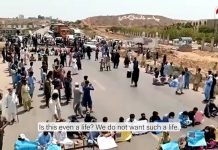
In Quetta, the capital of Balochistan, the Voice for Baloch Missing Persons (VBMP) organized a protest rally on Eid day. A large number of participants, including women, children and elderly individuals, joined the demonstration to demand the recovery of missing persons.
Protesters said that instead of celebrating Eid with joy, Baloch families were “gripped with anxiety over the safety of their missing relatives” and were forced to mark the occasion in sorrow and protest.
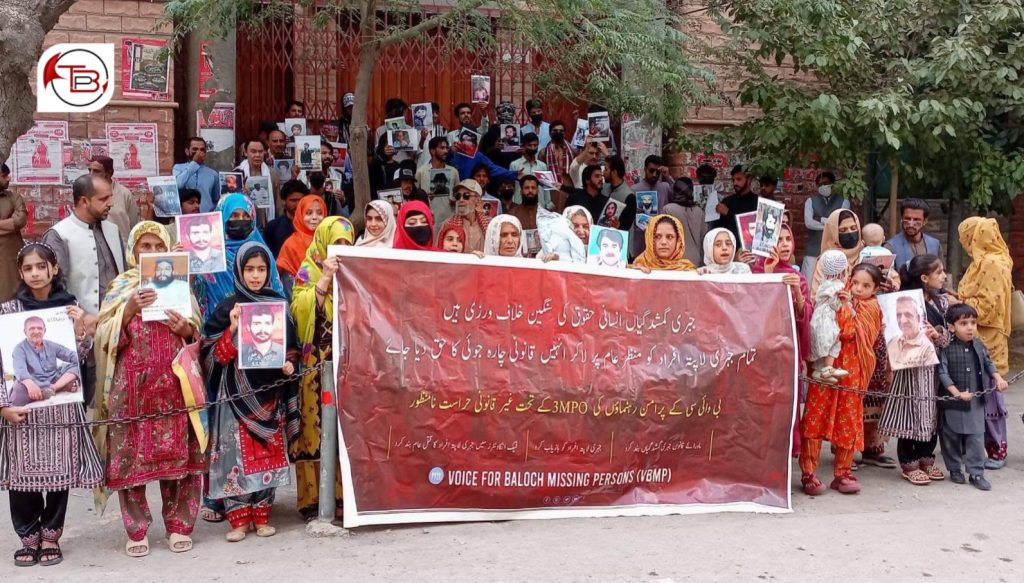
“At a time when families elsewhere are celebrating joyfully, Baloch families are on the streets, calling for justice,” one speaker said. “Their pain must be felt as our collective pain, and we must raise an effective voice to fulfil our human responsibilities.”
Participants accused Pakistani security forces of routinely carrying out enforced disappearances in Balochistan, claiming that such actions violate both the Constitution and fundamental human rights.
“Instead of upholding the law, security forces in Balochistan are themselves violating it,” a VBMP leader said.
The group urged the government to “take meaningful steps to address the humanitarian crisis that has been created in Balochistan.”
Coordinated protests across Chaghi
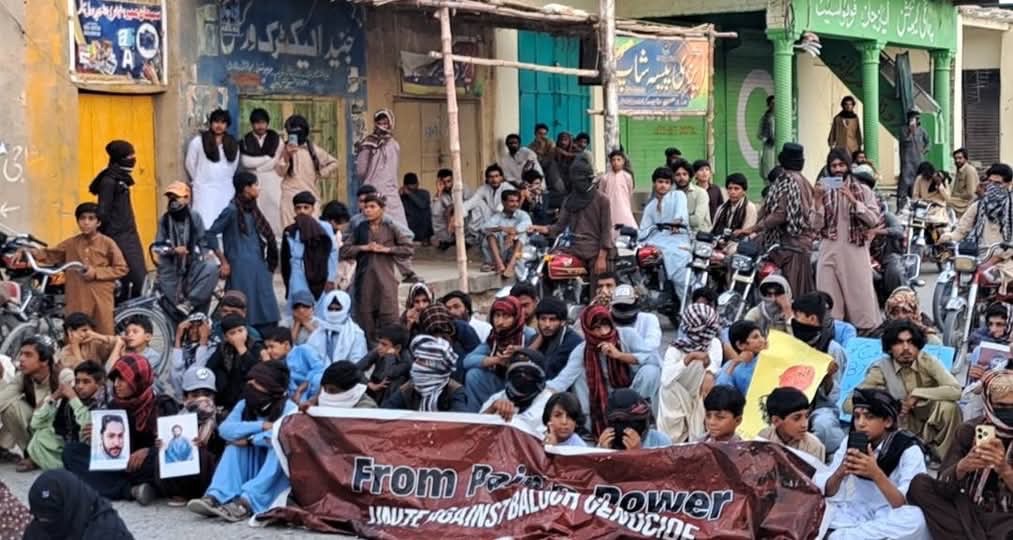
Similar protests and awareness campaigns were held in Chaghi district, including in Dalbandin, Nokundi, Yakmach and Ameenabad. The events were organized by the Baloch Yakjehti Committee’s (BYC) Rakhshan Region Chaghi Zone, along with families of the disappeared.
In Dalbandin, a rally marched from Arab Mosque to the local press club, demanding the recovery of Ghulam Hazrat Baloch and Abdullah Baloch — both reportedly disappeared by Pakistani forces in 2018. Their families said they had sought answers for years without success.
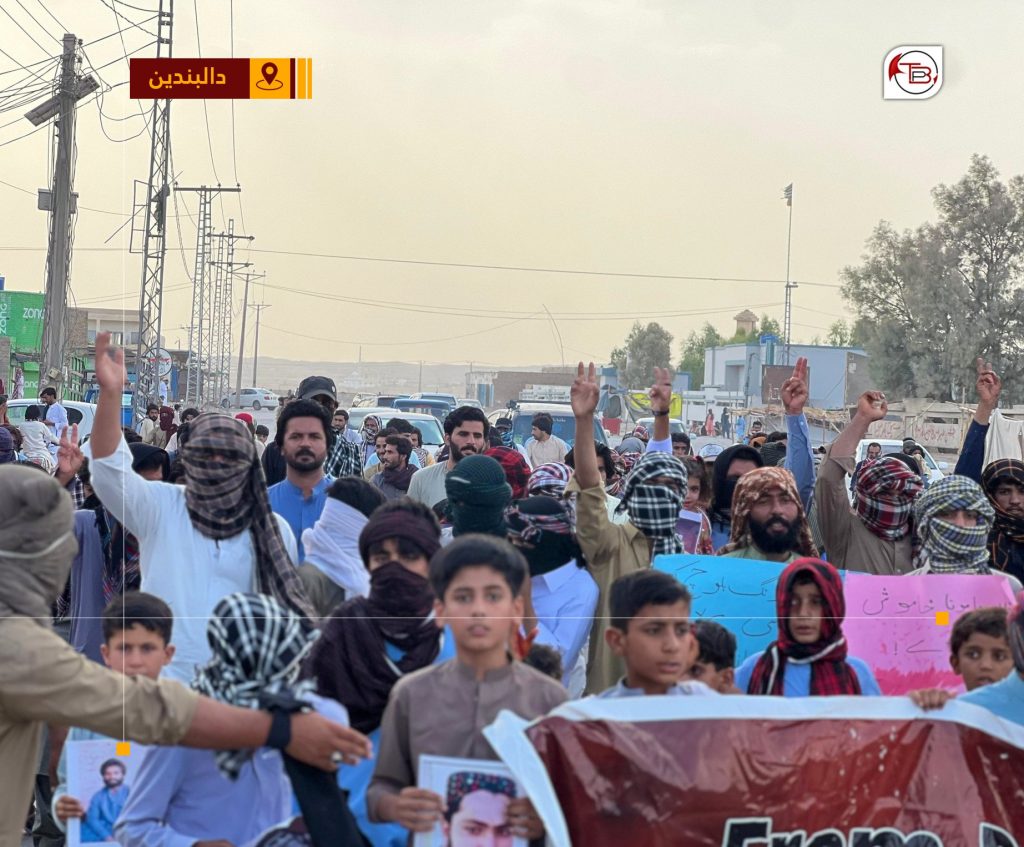
Human rights organizations were urged to intervene and support the recovery of the missing men.
As part of the awareness campaign, pamphlets were distributed in various areas, detailing alleged cases of enforced disappearance, extrajudicial killings, and repression. The pamphlets declared: “Silence should be seen as death, and resistance as the path to life.”
One pamphlet asked: “If there are charges against Dr Mahrang Baloch, Bebarg Baloch, or other political prisoners, why are they not brought before an open court?”
The public was urged not to ignore the pleas of Baloch mothers, sisters and children.
‘We Are Mahrang’: Protest Held in Kharan on Eid
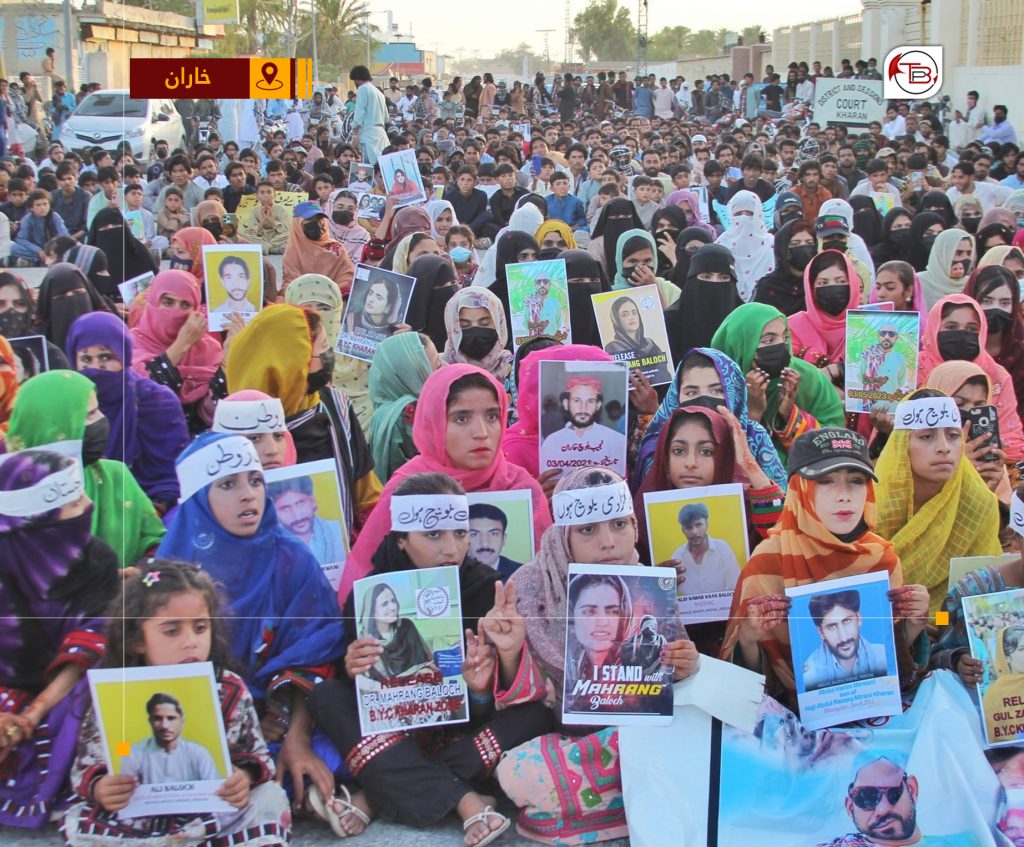
In Kharan, a large protest was held on the first day of Eid al-Adha against enforced disappearances and the continued detention of Baloch Yakjehti Committee leaders.
The demonstration was organized by the BYC’s Kharan Zone and attended by hundreds of women, children, and relatives of missing persons.
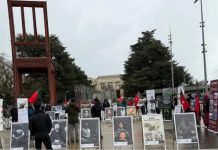
Protesters carried photographs of the disappeared and posters demanding the release of detained BYC leaders, including Dr. Mahrang Baloch.
Many children wore headbands reading “Yes, we are Mahrang,” expressing solidarity with the imprisoned activist. The protest called for an end to enforced disappearances and for all political prisoners to be brought before a court of law.
‘The Grief of Eid’
In a statement titled ‘Eid Festivities and the Grief of Baloch’, the Baloch Yakjehti Committee addressed the Baloch public, asking them to reflect on the condition of their region and people.
“Why are your loved ones being forcibly disappeared from your homes, from the streets, or during travel?” the statement asked. “Are you truly safe? The truth is, you are not — simply because you are Baloch.”
The BYC accused state forces of targeting people indiscriminately, regardless of age, gender or health.
“They have no ethics, no faith, and no fear of law,” the group said. “Across the world, children are considered protected — even in times of war — but this is not the case in Balochistan. Here, innocent children are also abducted, tortured, and murdered.”
The statement cited the case of Mahjabeen Baloch, allegedly abducted from her hostel days after her brother’s disappearance, and accused Pakistani forces of demolishing homes in Kalat’s Sheikhri area, leaving residents without shelter.
It also highlighted the importance of learning from the histories of other nations that had overcome oppression through self-reliance and collective struggle.
“They did not wait for help,” the statement read. “They stood against tyranny and succeeded.”
The group said that the arrest of national leaders should not stop the movement, and urged every Baloch to raise their voice. “This is not just a legal right but a national and moral obligation,” the statement said.
The BYC described its platform as one that seeks to unify the Baloch nation. “One individual, one village, or one tribe alone cannot end this oppression. The whole nation must unite.”
“Today is Eid,” the statement concluded. “But for most Baloch families, there is no celebration — only grief. Their loved ones are missing, martyred, or facing constant harassment.”
The public was urged to visit the homes of victims, support grieving families, and educate children about the injustices faced by the Baloch people.