
















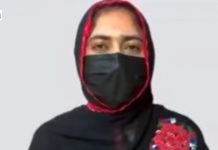


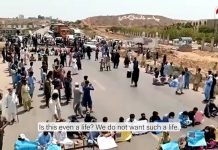





Sammi Deen Baloch, a leader of the Baloch Yakjehti Committee (BYC), has said that while Muslims across Pakistan and the world celebrate Eid, the people of Balochistan are mourning and waiting for the return of their loved ones from what she described as “torture cells.”
In a statement released during Eid, Sammi said the festive spirit has been replaced in Balochistan by silence, grief, and unanswered questions.
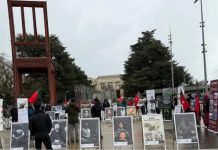
“Some wait for their husband, others for a brother, a son, or a daughter waiting for her father to return alive from prison,” she said. “This time, even a sister has been subjected to enforced disappearance along with her brother — and she remains missing to this day.”
She added that the leadership of the Baloch Yakjehti Committee remains imprisoned under Section 3 of the Maintenance of Public Order (MPO), a colonial-era law widely criticised by rights groups.
“There is suffering all around,” she said. “Almost every other household is mourning and demanding the return of their loved ones.”
Referring to her own experience, She said, “I, Sammi Deen Baloch, have been struggling for the recovery of my father for the past sixteen years. Perhaps I have forgotten what Eid and its joy even feel like.”
She warned that Balochistan is once again witnessing a resurgence in extrajudicial violence.
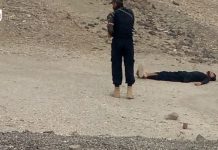
“Balochistan is burning. The cycle of mutilated bodies and fake encounters, which had subsided after 2014, has resumed,” she said.
Sammi also criticised recent legislation, alleging that the current government has passed a bill that “seeks to legalise enforced disappearances under a draconian law.”
“Instead of healing the wounds that have brought Balochistan to this state,” she said, “they are being reopened — inflicting new ones.”
It is worth noting that on 4 June, the Balochistan Assembly passed the Anti-Terrorism (Balochistan Amendment) Act 2025, a law that allows the preventive detention of individuals for up to three months without formal charges or judicial oversight.
The legislation also empowers security agencies to issue detention orders, conduct inquiries through Joint Investigation Teams (JITs), and use surveillance boards composed of military personnel to assess detainees’ ideological and psychological profiles.
Law enforcement agencies are further authorised to search premises, arrest individuals, and seize property without prior judicial approval.
The Human Rights Commission of Pakistan (HRCP) expressed “grave concern” over the law, warning that it “grants sweeping powers of preventive detention… an unacceptable measure that undermines the fundamental rights to liberty, due process and protection from arbitrary arrest.”
In a statement on X, the HRCP added, “This framework violates the civilian law enforcement domain, blurring the lines of accountability. Moreover, giving law enforcement unchecked authority to search, arrest and seize material during ‘inquiries’ is liable to misuse and erodes constitutional safeguards.”
The commission urged the provincial government to reconsider the legislation and ensure that it aligns with Pakistan’s constitutional obligations under Article 10, and with its international human rights commitments under the International Covenant on Civil and Political Rights (ICCPR), to which Pakistan is a state party.