










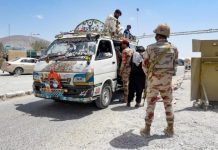














The Balochistan government has ordered passenger transport operators to retain travellers’ personal information for at least 10 days and ensure onboard CCTV cameras are operational, alongside plans to expand surveillance across Quetta.
A notice issued by the Provincial Transport Authority on October 7 applies to public-service vehicles operating on inter-district and interprovincial routes. Operators must record each passenger’s name, father’s name, Computerised National Identity Card (CNIC) number, permanent address and mobile phone number, retain the records for at least 10 days and provide them when requested.
The authority has also instructed operators to ensure CCTV cameras are functional and recordings are preserved. It warned that company management would be held responsible if cameras were found to be defective or switched off during an incident.
Passengers must present valid identification before tickets are issued. The notice also prohibits operators from refusing tickets or travel to passengers on regional or ethnic grounds.
Operators have been instructed not to transport foreign nationals residing illegally in Pakistan, including Afghan nationals, and to inform the authorities when such cases arise.
The notice warns of action under the Motor Vehicles Ordinance 1965 and Motor Vehicles Rules 1969, including fines, cancellation of route permits and closure of transport companies.
Passenger registration requirements were already being enforced earlier this year. In its June instructions, the Regional Transport Authority directed long-route bus and coach companies to register passengers through the government’s Travel Eye software and with the relevant police station, warning of penalties for non-compliance.
Separately, the government has approved 2,900 surveillance cameras under the Quetta Green Digital Corridor initiative, part of the Quetta Integrated Security Project. Officials said the project would strengthen monitoring and emergency response through an integrated command-and-control system. Additional Quick Response Force stations were also approved.
Baloch journalist Saeed Buzdar questioned whether expanding surveillance would address shortcomings in existing security arrangements, pointing to maintenance and operational problems in earlier projects. He said the effectiveness of the measures would depend on the reliability of the infrastructure and authorities’ ability to analyse the information collected.
Buzdar said the collection of detailed passenger records needed safeguards governing access, retention and use, alongside protection against potential misuse.
Earlier scrutiny of Quetta’s Safe City project identified problems with its existing surveillance infrastructure. A Balochistan Assembly committee reported that 600–800 cameras were non-functional despite expenditure exceeding Rs9 billion.
On January 29, Chief Minister Sarfraz Bugti said 97 per cent of the Safe City cameras had been restored and made operational. He also claimed a 70 per cent reduction in crime in Quetta over the preceding two months.
Two days after that announcement, the Baloch Liberation Army (BLA) launched the second phase of “Operation Herof,” saying its fighters carried out coordinated attacks at 48 locations across 14 cities.
In Quetta, the offensive included a suicide bombing in the highly secured Red Zone, clashes around government offices and attacks on police sites, while fighters established blockades near the Civil Secretariat and Civil Hospital.