


























Prolonged closures of border crossings between Balochistan and Afghanistan are inflicting severe economic losses on Punjab, with the province losing more than Rs80 billion every month, according to the Lahore Chamber of Commerce and Industry (LCCI).
LCCI President Faheem-ur-Rehman Saigol said that the continued shutdown of trade routes has badly disrupted bilateral commerce, with the cement and agricultural chemicals sectors among the worst affected. He noted that following border clashes between Pakistan and Afghanistan in October last year, all major trade routes were closed, effectively bringing cross-border trade to a standstill.
“The suspension of trade has not only damaged the economies of both countries but has also put the livelihoods of thousands of traders at risk on both sides of the border,” Saigol said.
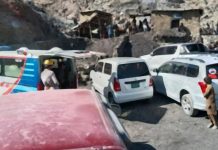
Chamber sources estimate that around 3,000 traders are currently stranded due to the closures, including approximately 1,200 Pakistani and 1,800 Afghan traders. Large quantities of fresh fruits, dry fruits and other food items transported from Afghanistan to Pakistan are reportedly rotting inside trucks parked at border points, causing heavy financial losses.
At the same time, Pakistan has been unable to export vegetables, agricultural produce, construction materials and medicines to Afghanistan, placing additional strain on the country’s export sector. Experts warn that the disruption of imports and exports has affected not only national economies but also transporters and logistics operators, who are facing acute financial difficulties.
Saigol said that Pakistan’s agricultural and industrial exports rely heavily on the Afghan border, which also serves as a key transit route to Central Asian states. “The halt in trade is increasing economic pressure. Incomes are falling, inflation is rising, and both the public and investors are growing increasingly anxious,” he added.
He pointed out that Pakistan’s exports are largely dependent on neighbouring countries, where it exports significantly more than it imports, with an annual trade volume of around $2.5 billion. Pakistan mainly exports textiles, pharmaceuticals and construction materials to these regional markets.
Calling for the restoration of trade ties, Saigol urged Afghanistan to take the initiative, recalling that Pakistan has hosted millions of Afghan citizens over the past four decades. He cited international examples to argue that trade should continue even amid political tensions. “Despite strained relations, trade and flights between China and Taiwan have continued,” he said.
The LCCI president also criticised the government and the Federal Board of Revenue (FBR) for failing to provide relief to traders during the crisis. Referring to traders associated with the Quetta Chamber, he said consignments of potatoes meant for Afghanistan had perished in trucks, while the transport sector was sliding into a serious financial crisis.
Saigol called on both governments to engage in immediate dialogue to reopen border crossings, warning that continued delays would deepen economic losses and undermine trade and economic stability across the region.