












The Balochistan Liberation Front (BLF) has released the photograph of a female suicide attacker after claiming responsibility for Sunday’s attack on a Pakistani forces’ camp in Nokkundi, where clashes continued into the early hours of Monday.
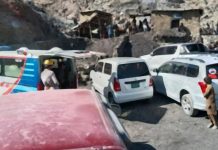
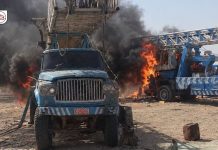
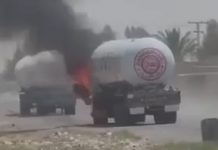
Earlier on Sunday, an SVBIED attack hit the main entrance of the Frontier Corps (FC) headquarters in Nokkundi, in Balochistan’s Chagai district. Security officials confirmed the explosion and said an exchange of fire was continuing inside the compound after the initial blast.
Local sources said the attacker detonated herself at the camp’s main gate, after which several armed fighters entered the compound.
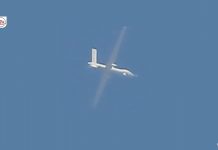
Initial unverified reports suggested that four to six assailants entered the headquarters following the blast. Residents said multiple explosions were heard, the exchange of fire continued for hours, and military helicopters were seen in the area.
Local sources also said that Pakistani military personnel had been killed or injured. Internet and mobile services were partially suspended in Nokkundi and adjoining areas after the attack.
BLF Claims Responsibility, Releases Photograph
In a brief statement, BLF spokesperson Major Gwahram Baloch said members of the group’s newly formed sub-unit, the “SOB” (Sado Operational Battalion), had carried out a “heavy attack” on what it described as a central compound used by foreign staff and engineers associated with the Reko Diq and Saindak mining projects.
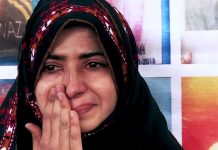
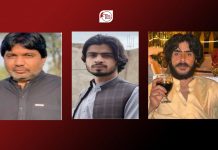
The BLF later released a photograph of the suicide bomber, identifying her as Zareena Rafiq, alias Tarang Maho, whom the group referred to as a “self-sacrificer.”
According to the group, she “broke through the compound barrier and detonated herself,” enabling other BLF fighters to enter the compound.
The group said its fighters remained inside the facility and that clashes were ongoing. A detailed statement would be issued after the operation concludes, it added.
FC Says Three Attackers Killed in ‘Retaliatory Action’
The spokesperson for FC Balochistan South said forces had killed at least three attackers in retaliatory fire after one assailant blew up at the gate of the Nokkundi FC headquarters.
The FC said a clearance operation was under way and that remaining attackers would be “dealt with soon.”
As of the latest reports received after midnight, the operation at the site was still continuing.
UPDATE: BLF Says Fighters Still Holding Positions Inside Compound
In an update issued on Monday morning, the Balochistan Liberation Front (BLF) said fighters from its Sado Operational Battalion (SOB) were still holding “strong positions” inside the main compound “used by foreign staff of the Saindak and Reko Diq projects in Nokkundi.”
The spokesperson, Major Gwahram Baloch, said the operation “remains under way” and claimed that BLF fighters had “forced the enemy to retreat.”
He alleged that Pakistani forces had imposed an internet blackout in the area “to cover up their failure and losses” and accused the state of promoting a “baseless narrative” about the attack.
Pakistani authorities have not responded to the latest BLF statement.
One of Balochistan’s Most Sensitive Regions
Nokkundi is a tehsil of Chagai, a border district located roughly 500 kilometres west of Quetta and about 130 kilometres from Taftan, the district headquarters. Chagai is Balochistan’s only district bordering both Afghanistan to the north and Iran to the west.
The FC camp targeted in Sunday’s attack lies along the Quetta–Taftan highway.
Nokkundi is viewed as one of Balochistan’s most sensitive areas because of its proximity to Pakistan’s nuclear test sites and its strategic location near the Reko Diq and Saindak copper-and-gold projects, which are among the largest undeveloped deposits of their kind in the world.
Sunday’s assault is one of the most significant attacks reported in Chagai district in recent years. The last major suicide bombing in the region occurred in 2018, when a convoy carrying Chinese engineers was targeted in Dalbandin by the BLA’s Majeed Brigade. Low-level attacks have taken place since then, but the Nokkundi compound strike is considered the most serious in years.
This story was updated to include a new BLF statement on the ongoing Nokkundi operation.