


























Amnesty International has strongly criticised the Balochistan government for placing 32 individuals, including prominent Baloch activists, on Pakistan’s terrorist watchlist under Section 11-EE of the Anti-Terrorism Act (ATA) 1997, describing the move as an “affront to human rights and due process.”
In a statement issued on Thursday, Amnesty International’s Deputy Regional Director for South Asia, Babu Ram Pant, said the activists had been added to the list “in an arbitrary manner” without being given an opportunity to challenge the decision.
“The arbitrary manner in which these individuals, including peaceful Baloch activists, have been put on a terrorist watchlist without being given an opportunity to challenge the decision is an affront to due process and their rights to liberty, privacy and freedom of movement,” he said.
The rights watchdog said it has long raised concerns that Pakistan’s anti-terrorism law “does not comply with international human-rights standards,” granting broad powers to detain or proscribe individuals who are merely exercising their rights and “systematically weaponized to target dissent and critical voices.”
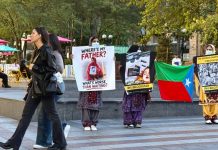
Amnesty International said the inclusion of Baloch women activists such as Dr Sabiha Baloch, Sammi Deen Baloch, Dr Shalee Assa, Naz Gul and Syed Bibi Sharif on the Fourth Schedule represented “a deeply troubling escalation” in the misuse of counter-terrorism legislation.
The group said these designations place the individuals under strict surveillance, restrict their movement, and allow the government to freeze their financial assets. Proscribed persons cannot travel outside designated areas without permission from local police.
The statement also expressed concern over reports of unlawful killings and the continuing military lockdown in Zehri, Khuzdar district, where Amnesty said all movement has been barred since 25 September and internet services have been shut down for months.
“We urge the government to remove all activists from both this list and other arbitrary designations such as the Exit Control List and Passport Control List,” Amnesty said. “The authorities must ensure due process and allow those affected to challenge the designation before an independent and impartial court.”
The rights organisation further called for “an immediate, impartial and transparent investigation” into reports of civilian deaths in Zehri during military operations and urged that the internet shutdown and other restrictions be lifted.
Balochistan authorities had earlier issued two notifications on 2 and 16 October designating 32 individuals from Khuzdar, Kech and Chagai districts as “proscribed persons” under the ATA. The list includes several members of the Baloch Yakjehti Committee (BYC) and the Baloch Women Forum (BWF), both of which had already condemned the decision as “politically motivated and unlawful.”
Amnesty said the government must bring Pakistan’s anti-terror laws in line with international human-rights obligations and end the use of such legislation to silence peaceful activism.