






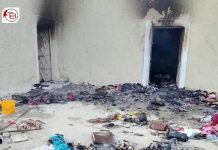
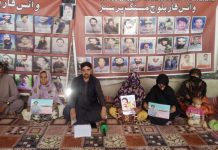

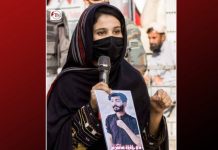
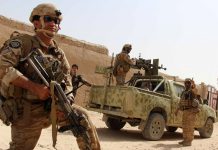
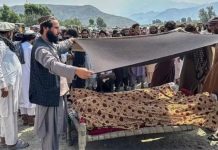
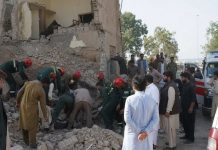


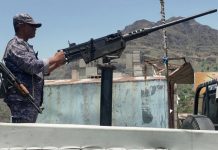
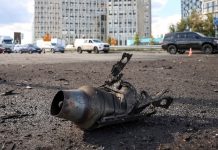
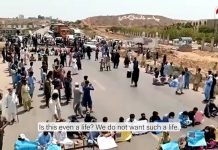

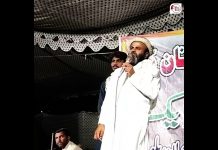
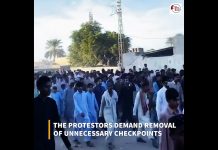


In the Zehri tehsil of Balochistan’s Khuzdar district, the Pakistan Army has been conducting a large-scale operation using both aerial and ground forces, including tanks, artillery, gunship helicopters, and drones. So far, eleven people have been killed, most of them women and children.
For the past two weeks, several parts of Zehri have been facing a severe humanitarian crisis. Many areas remain under military siege and curfew, with civilian movement and medical access completely restricted. Residents of Anjeera, Nichari, Pandran, Noorgama, and Kambi are struggling to obtain food, water, and healthcare.
Tensions in Zehri began on 11 August, when fighters of the Baloch Raji Ajoi Sangar (BRAS) gained control over certain areas following intense clashes. The town remained under the influence of the resistance fighters for nearly two months, after which the military launched extensive aerial and ground assaults. These operations have trapped thousands of civilians and exposed them to grave risks of casualties.
The ongoing military actions and blockades have brought only more suffering and mistrust to the people of Zehri. The use of force has never resolved political differences in the past, nor can it bring lasting stability now. If the state truly seeks peace, it must choose dialogue, justice, and political inclusion over the gun. Otherwise, the tragedy unfolding in Zehri will be remembered as yet another painful chapter in Balochistan’s troubled history.